Automation in Manufacturing Process: Boost Efficiency & Innovation
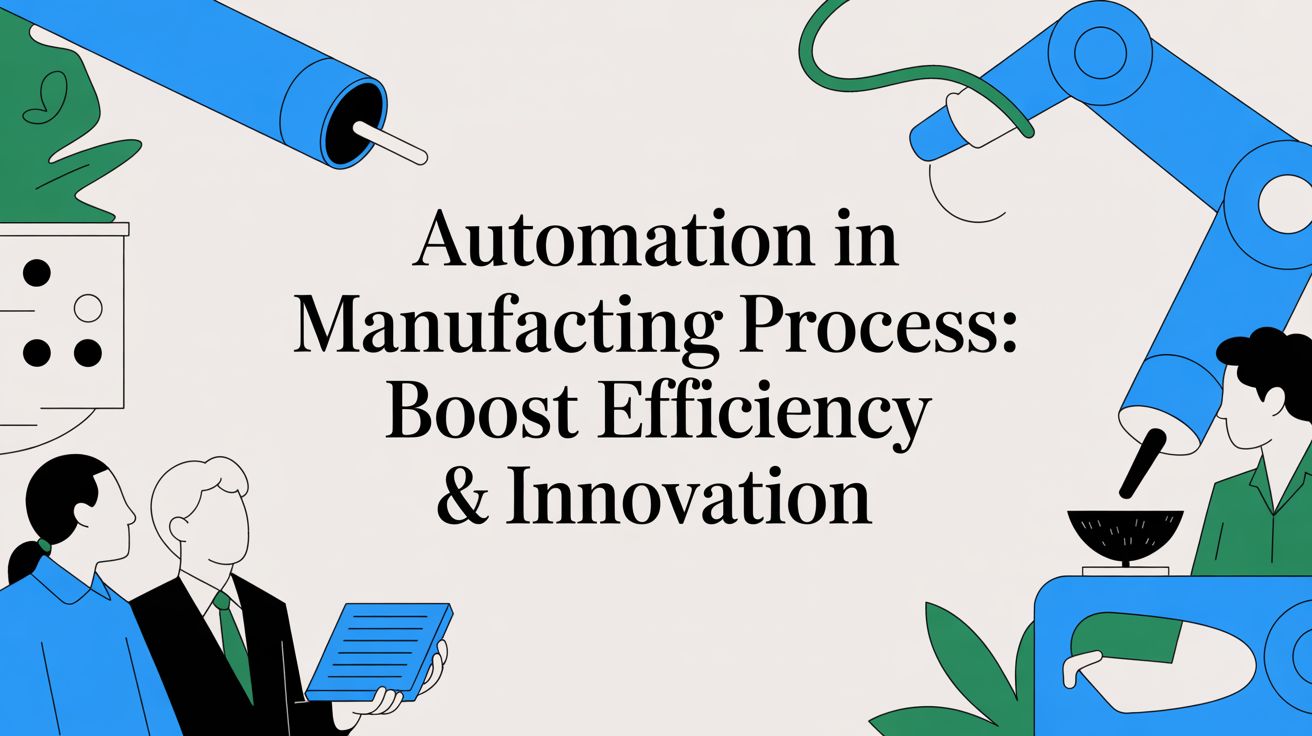
When we talk about automation in manufacturing, we're really talking about using technology to handle tasks that once required a human touch. It's about turning traditional production lines into smart, efficient systems that can practically run themselves. This goes way beyond just adding a few robots; it's about creating a whole ecosystem where different technologies work together to crank up productivity, nail down quality, and make the entire operation more flexible.
What Is Automation in the Manufacturing Process?
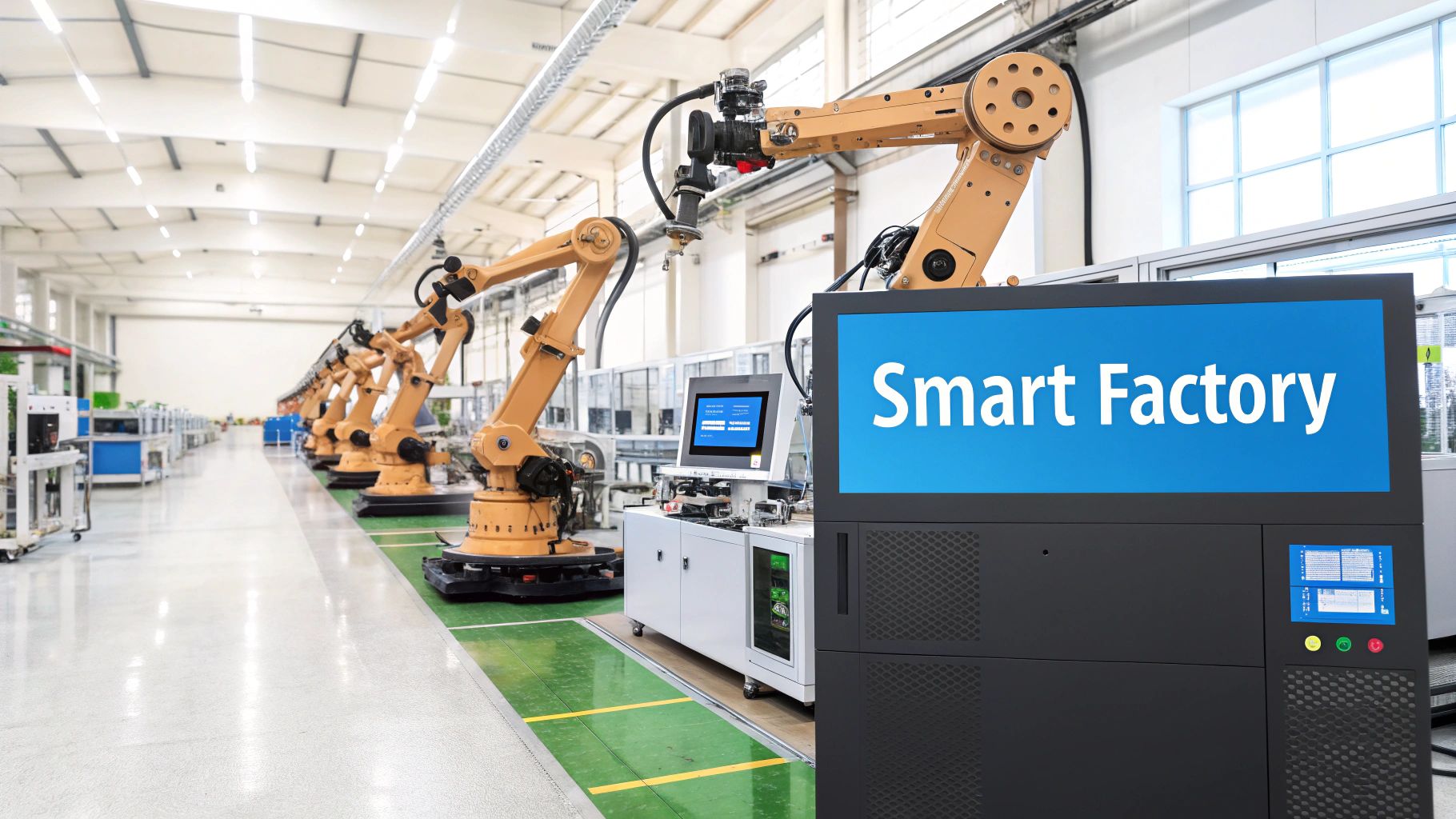
Picture a factory that doesn’t just operate—it thinks. This isn't science fiction anymore; it's what modern manufacturing looks like today. The old, noisy, manual assembly lines are giving way to sleek, data-savvy facilities where machines talk to each other, learn on the fly, and adjust in real time.
The idea of automation in a manufacturing process has grown far beyond the classic image of a single robotic arm welding a car door. Today, it’s a fully connected network where the digital and physical worlds merge. It's less about replacing people and more about giving them a serious upgrade, freeing them up from the dull, dangerous, or back-breaking parts of the job.
The Driving Forces Behind Automation
So, why is this shift happening right now? A few key pressures are pushing manufacturers to automate, making it a must-have strategy to stay in the game, let alone get ahead.
- Global Competition: The pressure is on to make things faster and cheaper than the next guy. Automation lets a factory run 24/7 without breaks or burnout, which dramatically boosts output while slicing the cost of each item produced.
- Workforce Dynamics: In many places, it's getting harder to find skilled workers, and a lot of experienced hands are nearing retirement. Automated systems can step in to fill those gaps, keeping the lines running and even helping to preserve the knowledge of veteran employees.
- Demand for Customization: Customers want products made just for them, and they want them now. Flexible automation makes it possible to switch from making one product version to another on a dime, without the expensive downtime that old-school assembly lines required.
At its core, automation is the strategic response to a simple question: How can we make things better, faster, and smarter? It is the engine that powers the modern factory, turning raw data into tangible efficiency and innovation.
This isn't just about bolting new equipment to the floor. It's a fundamental rethink of the entire production process, from the first sketch to the final shipment. For any business even remotely tied to manufacturing, getting on board with automation is the key to building a resilient, agile, and profitable operation for the future.
Understanding The Core Automation Technologies
To really get what makes modern manufacturing automation tick, we need to pop the hood and look at the technologies driving it. These aren’t just standalone gadgets; they’re a team of interconnected systems that, when working together, create something incredibly powerful and intelligent.
Think of it like building a high-performance car. You've got the engine, the chassis, and the onboard computer. Each part is crucial, but it's how they work in harmony that delivers real speed and control. A smart factory is no different.
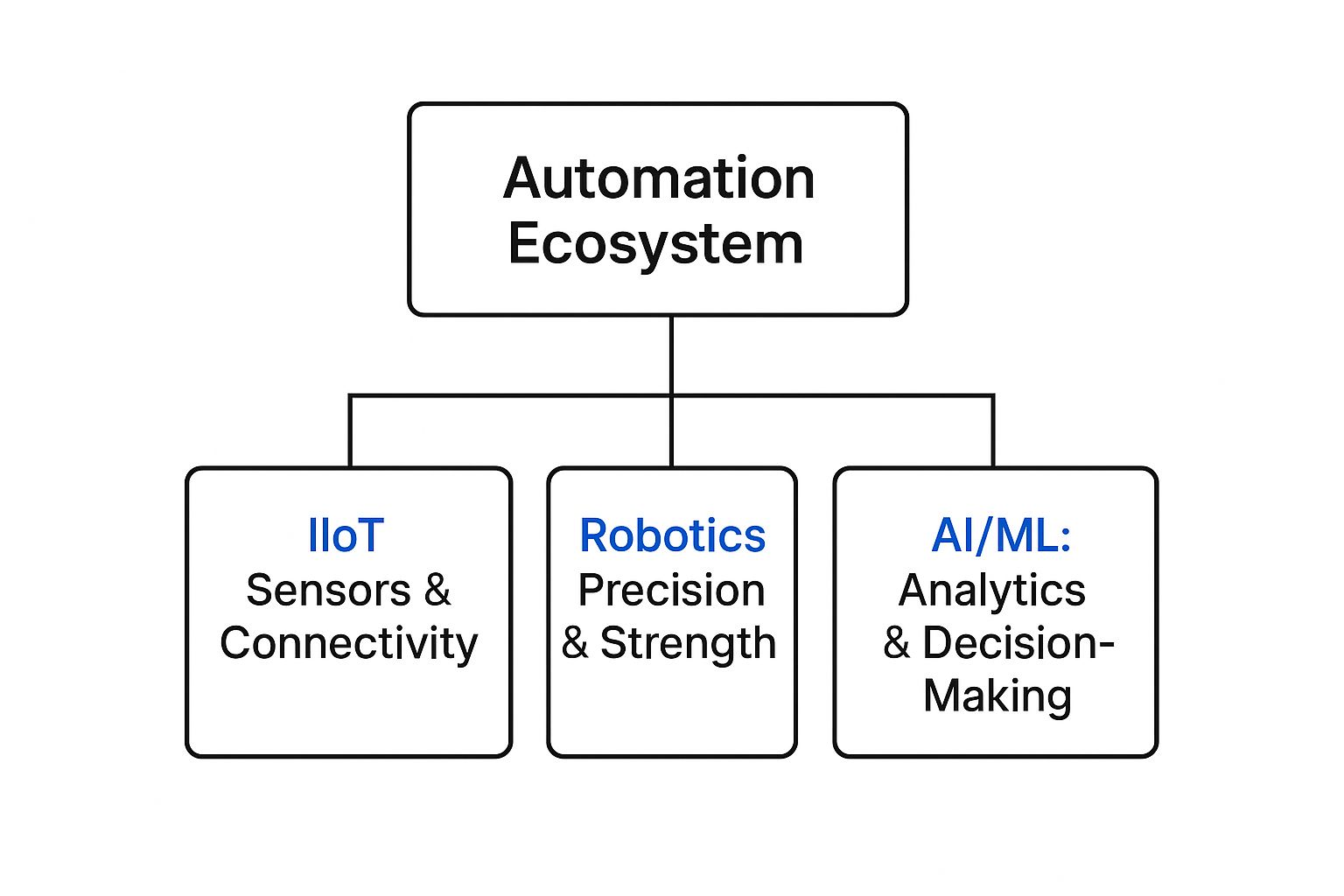
It all boils down to three main pillars of technology. Each one plays a distinct role in sensing, acting, and thinking, and understanding how they mesh together is the key to seeing the bigger picture.
IIoT: The Central Nervous System
The Industrial Internet of Things, or IIoT, is the foundation—it's the factory’s central nervous system. It’s a massive network of sensors, machines, and smart devices, all chattering away in real time, gathering a constant stream of data from every corner of the shop floor.
Imagine tiny digital spies attached to every motor, valve, and conveyor belt. They’re constantly reporting back on vitals like temperature, vibration, pressure, and speed. This nonstop flow of information gives you a live, X-ray view of your entire operation, taking the guesswork out of decision-making.
The real job of IIoT is to make the invisible visible. It turns a factory from a clunky collection of separate machines into a single, cohesive organism that can sense and respond to its own condition.
This interconnectedness is what makes everything else possible. Without the raw data from IIoT, the rest of the automation tech would essentially be flying blind.
Robotics: The Powerful Muscles
If IIoT is the nervous system, then robotics and automated machinery are the factory's muscles—strong, precise, and tireless. These are the systems doing the heavy lifting and intricate work, performing physical tasks with an endurance and accuracy that humans simply can't match. They are the true workhorses on the modern production line.
Robots are naturals at any job that is:
- Repetitive: Think welding the same seam, painting a panel, or packing a box thousands of times a day without a single slip-up.
- Strenuous: Lifting heavy engine blocks or working in extreme temperatures is no problem for a machine built for the task.
- Precise: Placing delicate microchips or performing complex assembly steps with flawless consistency is where they shine.
AI and Machine Learning: The Intelligent Brain
The final, and perhaps most exciting, piece of the puzzle is Artificial Intelligence (AI) and Machine Learning (ML). This is the factory's brain. It's where all the data collected by the IIoT nervous system is processed, analyzed, and transformed into smart, actionable decisions. AI algorithms are brilliant at digging through mountains of data to spot hidden patterns, predict future outcomes, and fine-tune processes on the fly.
Here’s a look at how these core technologies function in the real world.
Key Automation Technologies and Their Roles
| Technology | Primary Role (Analogy) | Manufacturing Application Example |
|---|---|---|
| Industrial Internet of Things (IIoT) | The Nervous System | Sensors on a conveyor belt tracking product flow and temperature in real time. |
| Robotics & Automation | The Muscles | A robotic arm welding car frames with perfect consistency 24/7. |
| AI & Machine Learning | The Brain | An AI algorithm analyzing sensor data to predict a machine failure before it happens. |
This combination shifts the factory from being merely reactive to becoming truly predictive.
Instead of just fixing problems after they’ve shut down a line, AI can see them coming. For instance, an ML model can analyze the vibration data from a critical motor and flag it for maintenance weeks before it actually breaks down, preventing costly downtime. Exploring the full range of product features available today shows just how deeply AI is woven into modern production tracking and operational management.
Adopting these smart technologies is no longer a fringe idea—it’s a core business strategy. A recent Deloitte survey found that 57% of manufacturers are already using cloud computing and data analytics, with 46% deploying IIoT solutions. And they’re not stopping there. Looking ahead, 41% plan to put their money into factory automation hardware, cementing the central role of these systems in the future of manufacturing. By knitting these technologies together, factories aren’t just running more efficiently; they’re getting smarter and better every single day.
The Real-World Benefits of Factory Automation
The technology behind automation is fascinating, but what really matters are the tangible results you see on the factory floor. When you move past the theory and actually bring automation into your manufacturing process, you kick off a chain reaction of benefits that strengthens your entire operation—from safety and quality all the way to the bottom line. These aren't just minor tweaks; we're talking about a fundamental shift in how things get made.
You'll feel the impact across every key metric. Automation helps build a more resilient, competitive, and profitable business by turning a series of separate steps into one smooth, intelligent workflow.
Boosting Product Quality and Consistency
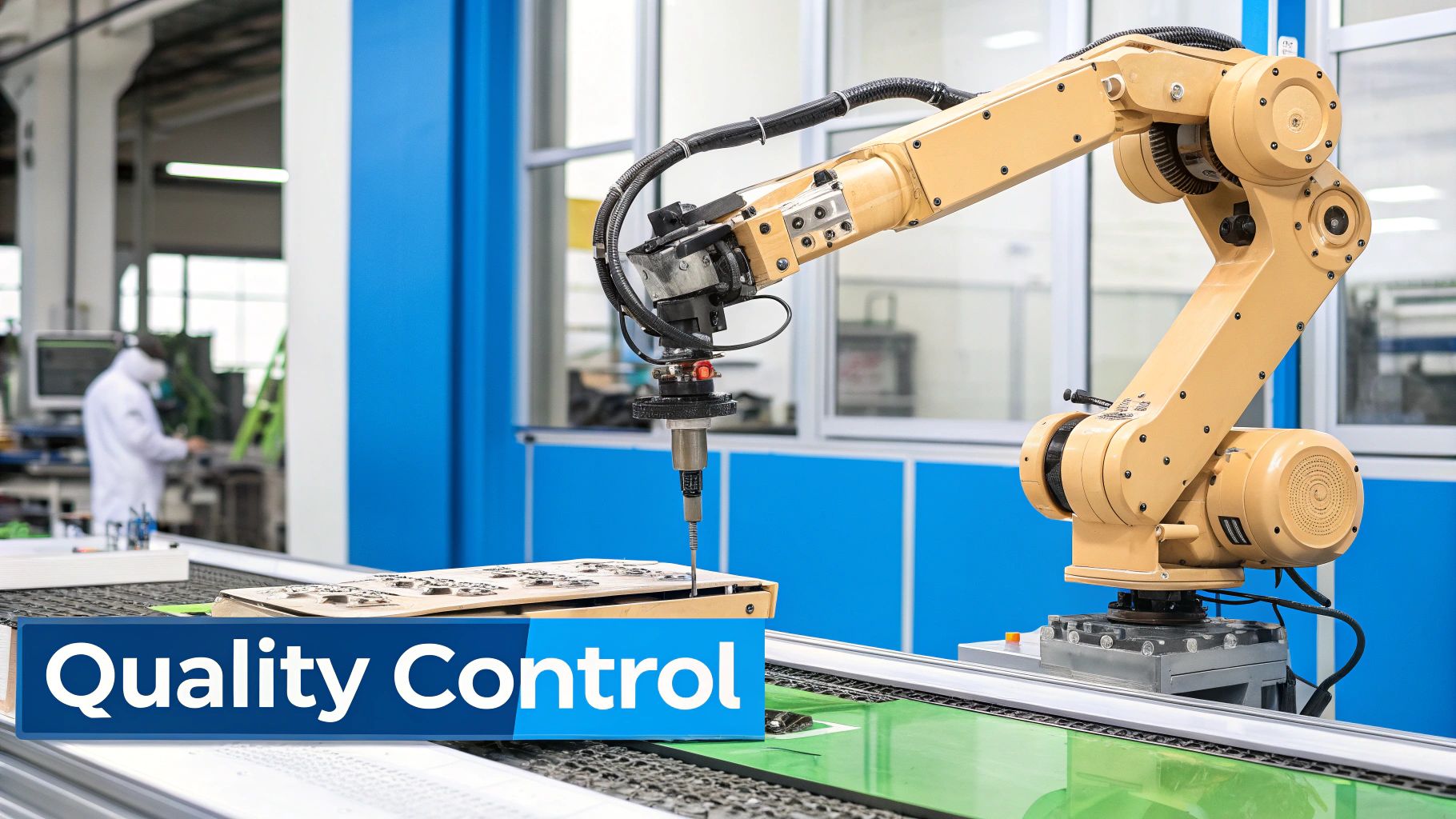
One of the first things you’ll notice after introducing automation is a huge leap in product quality. Even your most skilled operators are human; they get tired and their work can vary slightly from one hour to the next. An automated system, on the other hand, performs a task with the exact same precision every single time.
Picture an automated quality control system that uses high-resolution machine vision. It can inspect thousands of components an hour, catching tiny defects that are literally invisible to the human eye. And it does this 24/7 without ever getting distracted, ensuring every product that leaves the line is perfect.
This level of consistency directly results in:
- Drastically lower error rates, which means less scrap and wasted material.
- Fewer product returns and warranty claims, which is great for your brand's reputation.
- Happier customers who know they can rely on your high-quality goods.
By taking human variability out of critical processes, automation sets a completely new standard for quality—one that’s nearly impossible to hit with manual labor alone.
Creating a Safer Work Environment
Let's face it, many manufacturing jobs involve tasks that are physically exhausting, repetitive, or just plain dangerous. Handing these high-risk jobs over to robots is one of automation's greatest strengths. It immediately creates a safer culture and boosts employee morale.
Think about a metal fabrication shop. Instead of an employee having to manually lift heavy steel sheets or operate a powerful, dangerous press, a robotic arm can handle it all. The robot doesn’t mind fumes or extreme heat, keeping people out of harm's way.
Automation fundamentally changes the relationship between workers and their environment. It turns hazardous job sites into safer, more controlled spaces where people can focus on oversight and problem-solving rather than physical risk.
This shift does more than just reduce workplace accidents and their associated costs. It also makes manufacturing a more appealing career, allowing employees to use their brains for more valuable tasks like programming, maintenance, and figuring out how to make the process even better.
Increasing Production Speed and Throughput
In a competitive world, speed is everything. Automated systems can work at a pace and for a duration that people simply can't match, leading to a massive increase in overall output. This means you can meet customer demand faster and slash your lead times.
A great example is an automated packaging line. It can sort, box, and label products at incredible speeds, running nonstop through multiple shifts without a break. This gets rid of the bottlenecks that often slow things down at the end of the line, getting finished goods out the door much more quickly.
This boost in speed and efficiency leads directly to cost savings. With machines handling the grunt work, labor costs go down, and you can reassign your team to focus on things like innovation and design. Producing more in less time is a powerful competitive advantage.
Enabling Greater Flexibility and Agility
Modern automation isn't stiff and rigid—it's incredibly flexible. Today’s systems can be reprogrammed in a flash to handle different product models or switch from making one item to another. That kind of agility is essential for keeping up with fast-changing market trends and the growing demand for customized products.
Imagine a custom furniture workshop. An automated CNC machine can get a new design file and immediately start cutting parts for a completely different cabinet style, all without a long, manual setup. This allows the business to offer a huge range of personalized products without sacrificing efficiency, turning the automation in the manufacturing process from a mass-production tool into a mass-customization engine.
How Top Companies Use Automation Today
It’s one thing to talk about the benefits of automation in theory, but seeing it in action on a real factory floor is where it all clicks. When you step inside a modern manufacturing facility, you quickly realize how adaptable these technologies are. Whether it’s putting together a complex SUV or packaging delicate cookies, automation is being custom-fit to solve specific industry problems.
Let's peek behind the curtain at a few different operations to see what this looks like. Each example shows how a particular type of automation solves a critical need, whether that's precision, sheer speed, or worker safety. These stories make it clear that automation isn't a one-size-fits-all solution, but a flexible toolkit.
Automotive Giants and Collaborative Robotics
Walk through a modern car factory and you'll witness an impressive partnership between people and machines. Collaborative robots, or "cobots," are everywhere. Unlike the massive, caged-off industrial robots of the past, cobots are designed to work safely right next to their human counterparts on the final assembly line.
A perfect example is a cobot lifting a heavy dashboard into place. It holds the component perfectly steady while a technician handles the intricate wiring and connects the sensitive electronics. This setup is so effective because it lets each party do what they do best.
- The Robot: Takes on the physically exhausting, repetitive job of lifting and holding, which dramatically reduces the risk of strain and injury for the worker.
- The Human Technician: Uses their dexterity and problem-solving skills to manage the delicate tasks that demand a human touch and critical thinking.
This hybrid approach creates a more efficient work cell that boosts productivity, improves employee well-being, and upholds the strict quality standards the auto industry demands. For more ideas on optimizing these kinds of workflows, you can find great resources on the TimberCloud blog.
Food Processing and High-Speed Vision Systems
Now, let's switch gears to a food processing plant, an environment where speed, hygiene, and consistency are non-negotiable. Here, automated vision systems are the unsung heroes, acting as super-human quality control inspectors. They work at a pace no person could ever sustain.
Picture a conveyor belt where thousands of cookies are zipping by every minute. A high-speed camera system scans every single one, checking for the perfect size, shape, color, and even the right number of chocolate chips. If a cookie is even slightly off, a precise puff of air instantly removes it from the line. The same system then guides the flawless ones into their packaging.
Automation in the food industry is the ultimate guardian of brand consistency. It ensures that the product a customer buys in New York is identical to the one they buy in California, every single time.
This technology guarantees a uniform product, slashes waste, and maintains strict food safety standards by minimizing human contact with the food.
Pharmaceutical Labs and Precision Automation
Finally, let's look at the pharmaceutical world, an industry built on intense regulation and the need for absolute, unwavering precision. In this space, automation in manufacturing process isn't just about being more efficient—it’s a fundamental part of staying compliant and keeping patients safe.
Inside a pharmaceutical lab, you'll find automated systems handling tasks where the smallest mistake could have dire consequences. Robotic arms measure and mix active ingredients with a precision down to the microgram, a feat impossible for a human hand. Better yet, every single action is automatically logged, creating a perfect, tamper-proof digital record that's ready for any regulatory audit.
This reliance on robotics is exploding worldwide. The number of industrial robots in operation has now reached 4,664,000 units, a 9% jump from the previous year. China is leading the way, responsible for 54% of all new robot installations. You can find more data on this global trend over at IFR.org.
These real-world examples prove it: whether the goal is better collaboration, faster production, or flawless accuracy, automation is the key.
Your Strategic Roadmap for Implementing Automation
Jumping into automation can feel like a massive undertaking, but it doesn't have to be. The secret isn't a factory-wide, flip-of-the-switch overhaul. Instead, think of it as a series of smart, deliberate steps. A clear roadmap is your best friend here, guiding you from where you are now to a more efficient, automated future without bringing everything to a screeching halt.
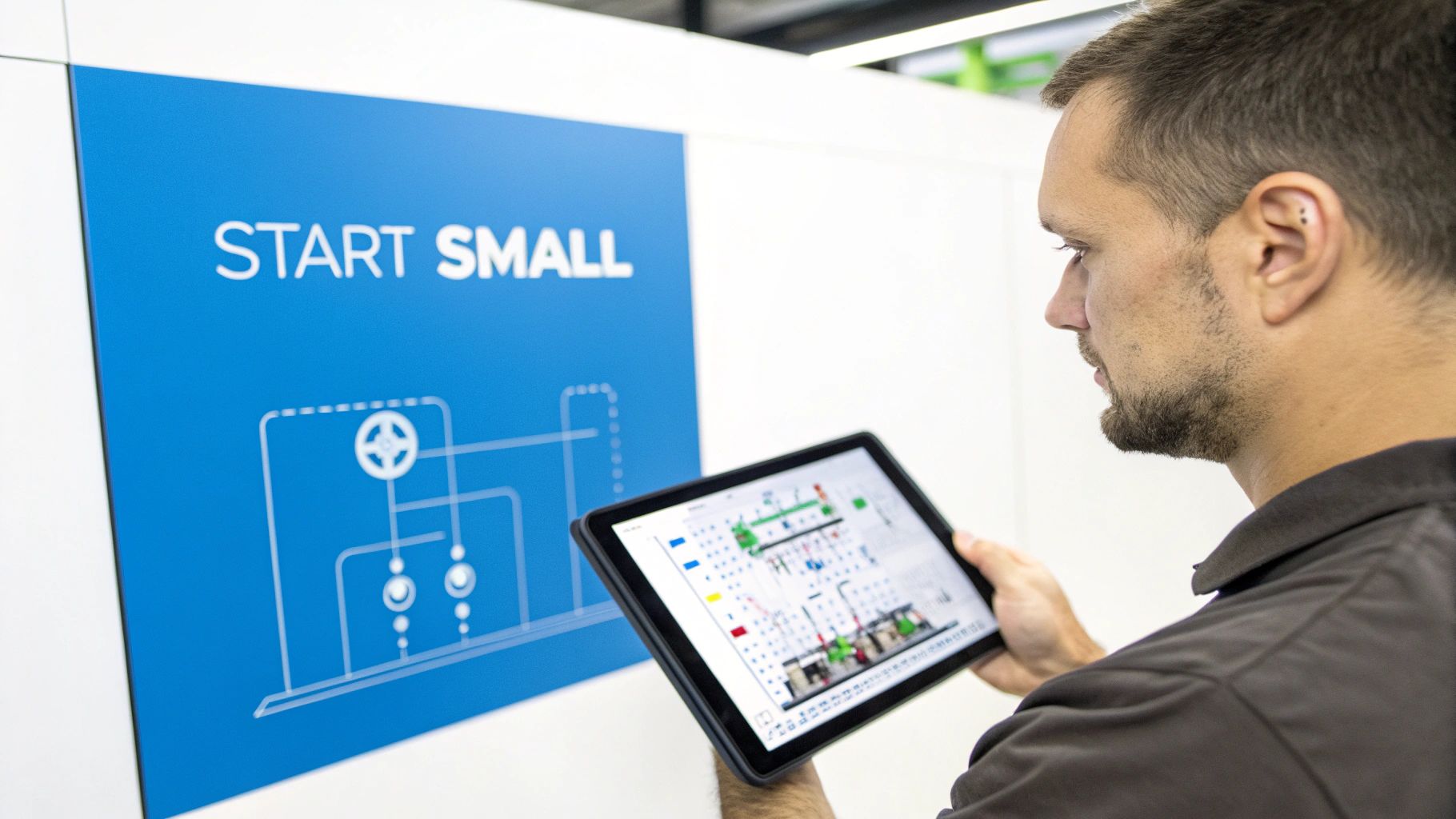
The whole journey kicks off with a simple but powerful idea: start small and prove value. Don't try to automate your entire operation in one go. Pick one specific, high-impact problem and solve it first. This approach keeps risk low and builds the momentum you'll need for bigger changes down the line.
Start by Pinpointing Your Biggest Bottleneck
Before you even glance at a robotics catalog, you need to know your current operations inside and out. The best starting point for any automation in manufacturing process is to find your single biggest bottleneck—that one spot where work always seems to pile up, quality takes a nosedive, or safety is a constant worry.
This focused strategy ensures your first investment delivers the most visible return. So, walk your shop floor and start asking some tough questions:
- Where are delays most common?
- Which tasks produce the most errors or require the most rework?
- What jobs are physically draining or dangerous for your team?
The answers will point you straight to your perfect pilot project. By fixing a well-known pain point, you show immediate value and get crucial buy-in from your team right from the start.
Conduct a Thorough Needs Assessment
Once you've zeroed in on your target area, it's time to get specific with a formal needs assessment. This is where you move from a gut feeling to a concrete plan with clear, measurable goals. Vague ambitions like "improve efficiency" won't cut it—you need hard targets to know if you've actually succeeded.
For instance, your goals might look more like this:
- Reduce the scrap rate in the finishing department by 20% within six months.
- Increase throughput on the packaging line by 15% in the next quarter.
- Eliminate all manual lifting tasks over 50 pounds in the assembly area.
A well-defined objective acts as your North Star throughout the implementation process. It ensures every decision, from technology selection to team training, is aligned with a specific, valuable business outcome.
With these goals in hand, you can start looking at potential technology partners. Find vendors who really get your industry and can offer solutions that fit your specific challenge. It’s also smart to get a handle on costs early; you can start by exploring transparent pricing for manufacturing tools to help build a realistic budget.
Prepare Your Team for the Transition
Let’s be honest: the human element is the most critical piece of this puzzle. Automation thrives when your team views it as a powerful tool to make their jobs better, not as a replacement. That’s why open communication and a real plan for workforce development are absolutely essential.
Kick things off by being transparent about why you’re bringing in automation and what it's meant to accomplish. Make it clear that these new systems are there to handle the dull, dirty, and dangerous tasks, freeing up people to focus on more complex, engaging work.
Then, invest in your people through upskilling and reskilling. Your team will need new abilities to operate, maintain, and troubleshoot these automated systems, so make sure training is a core part of your implementation budget. This approach turns anxiety into an opportunity for professional growth, making your team not just ready for the change, but true champions of its success.
What's Next for Automated Manufacturing
The evolution of factory automation isn't just continuing—it's picking up serious speed. Looking ahead, we're seeing a mash-up of even smarter technologies that will give us factories that are more predictive, autonomous, and easier to tap into than ever before. We're moving past simply automating one-off tasks and into the realm of conducting the entire production symphony.
One of the biggest shifts on the horizon is hyper-automation. Think of it as AI becoming the central conductor for an entire orchestra of machines, software, and human processes. It's an all-in approach that aims to automate every single thing that can be, creating a smooth, unbroken line of data and action from the moment a sales order comes in to the second a product ships out.
This isn't just a niche trend; the market growth tells the story. The global manufacturing automation market, currently sitting at USD 13.53 billion, is on track to blow past USD 34.28 billion by 2034. That's a 9.74% annual growth clip, fueled almost entirely by AI and machine learning finding new ways to fine-tune every part of the production process. You can dig into the full market forecast to see what's driving this huge expansion.
The Rise of Digital Twins
Another game-changing concept taking hold is the digital twin. Imagine building a perfect, living, breathing virtual replica of your entire production line, all inside a piece of software. This lets you experiment with new layouts, simulate a massive surge in orders, or fine-tune workflows—all without turning a single physical screw on the factory floor.
A digital twin is the ultimate sandbox for innovation. It provides a risk-free playground to push the limits of efficiency and troubleshoot potential problems before they ever impact the real world.
With this technology, manufacturers can model how changes will play out with stunning accuracy. It's a massive time and money saver, cutting out the expensive and slow process of physical trial and error.
Making Automation Accessible to Everyone
For a long time, sophisticated automation was a luxury reserved for massive corporations with bottomless budgets. That's changing, and fast. New models like Robotics-as-a-Service (RaaS) are flipping the script. RaaS lets smaller businesses lease robotic systems on a subscription, much like they would for software.
This completely lowers the barrier to entry, making powerful automation tools accessible without a crushing upfront investment. It's a democratizing force, allowing smaller shops to compete on a more level playing field.
As we look to the future, the real theme isn't about replacing people. It's about augmenting human skills. We're creating a new generation of jobs centered on strategy, innovation, and managing these incredibly intelligent systems.
Frequently Asked Questions
Jumping into automation can feel like learning a new language. You've got questions, and that's a good thing. Let's clear up some of the most common myths and concerns that come up when you're looking to bring automation onto the factory floor.
Does Automation In Manufacturing Always Mean Replacing Human Workers?
Absolutely not. This is probably the biggest misconception out there. While it’s true that some repetitive or dangerous tasks get handed over to machines, the real goal is to enhance what your human team can do, not replace them.
Think of it as a partnership. Modern tools, especially collaborative robots (or "cobots"), are built to work right alongside people. They can take on the back-breaking heavy lifting or the mind-numbingly dull tasks, freeing up your skilled workers to focus on what humans do best: critical thinking, nuanced quality control, and creative problem-solving. This shift often creates new, more valuable roles in programming, system maintenance, and data analysis.
Is Automation Only for Large Corporations?
That idea is a relic of the past. It used to be that only the giants with massive capital could afford major automation projects, but the game has completely changed. Technology has become far more accessible, opening the door for small and medium-sized shops.
The notion that automation is out of reach for smaller businesses is outdated. Modern solutions and flexible payment models have leveled the playing field, letting companies of all sizes reap the rewards.
For instance, you no longer have to buy a robot outright. With Robotics-as-a-Service (RaaS), you can essentially lease the equipment on a subscription, slashing the upfront cost. The key is to start small. Find that one bottleneck on your line, automate it, and prove the ROI. That single win can fund the next project and the one after that.
What Is the First Step to Starting an Automation Project?
Don't just start buying equipment. The best first step is a simple, honest look at your current operations. Walk the floor and get a feel for where the real friction is.
- Where are the most frequent mistakes happening?
- What's the single biggest bottleneck holding back production?
- Are there any tasks that put your team at risk of injury?
Resist the urge to boil the ocean. Pick one specific, well-defined problem that’s a constant headache. By starting with a "proof of concept" project, you can get a quick, measurable win. This not only shows immediate value but also builds the confidence and momentum you'll need for bigger projects down the line.
Ready to streamline your custom manufacturing from quote to production? TimberCloud, Inc. combines e-commerce, ERP, and AI into a single platform that automates cut sheets, manages inventory, and accelerates your entire workflow. See how it works at https://timbercloud.com.
Topics
TimberCloud Team
Content Team
The TimberCloud team is dedicated to helping manufacturers streamline their operations with intelligent software solutions.