
Door & Window Manufacturing Software
Door and window manufacturing software lets a shop quote configurable products from spec, then build them to order: connecting an online configurator, formula pricing, and production in one system.
The operating system for door manufacturers
TimberCloud is door manufacturing software for shops making doors, windows, trim, moulding, and components: the customer specifies the product, the price calculates from your rules, and the order lands on the floor ready to build.
Doors and windows are configuration-heavy — size, swing, material, glazing, profile, hardware — and each combination changes the price and the build. Generic ecommerce can't quote that, and stock-first ERPs weren't built for it. That's the gap this software fills.
Quote from spec with a configurator
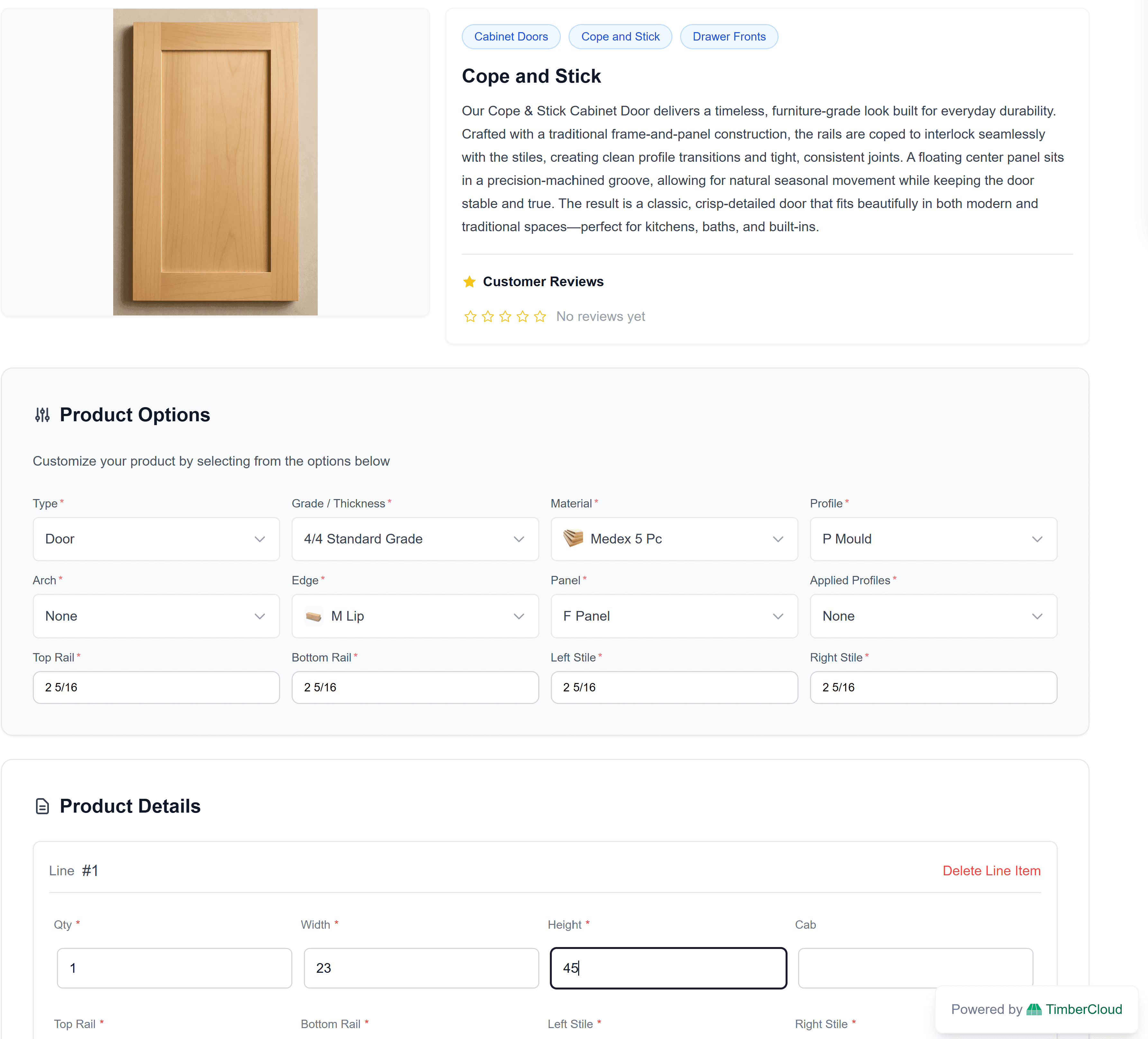
At the center is a product configurator that turns your options into an online, self-serve door configurator. Customers choose dimensions, materials, glazing, and hardware and get a real, formula-driven price — the window and door quoting step that usually eats a salesperson's day happens automatically and consistently.
Behind the configurator, formula pricing handles the combinatorics: per-size rules, material and glazing costs, hardware add-ons, and finish. No more pricing spreadsheets that only one estimator understands.
Build to order, on the floor
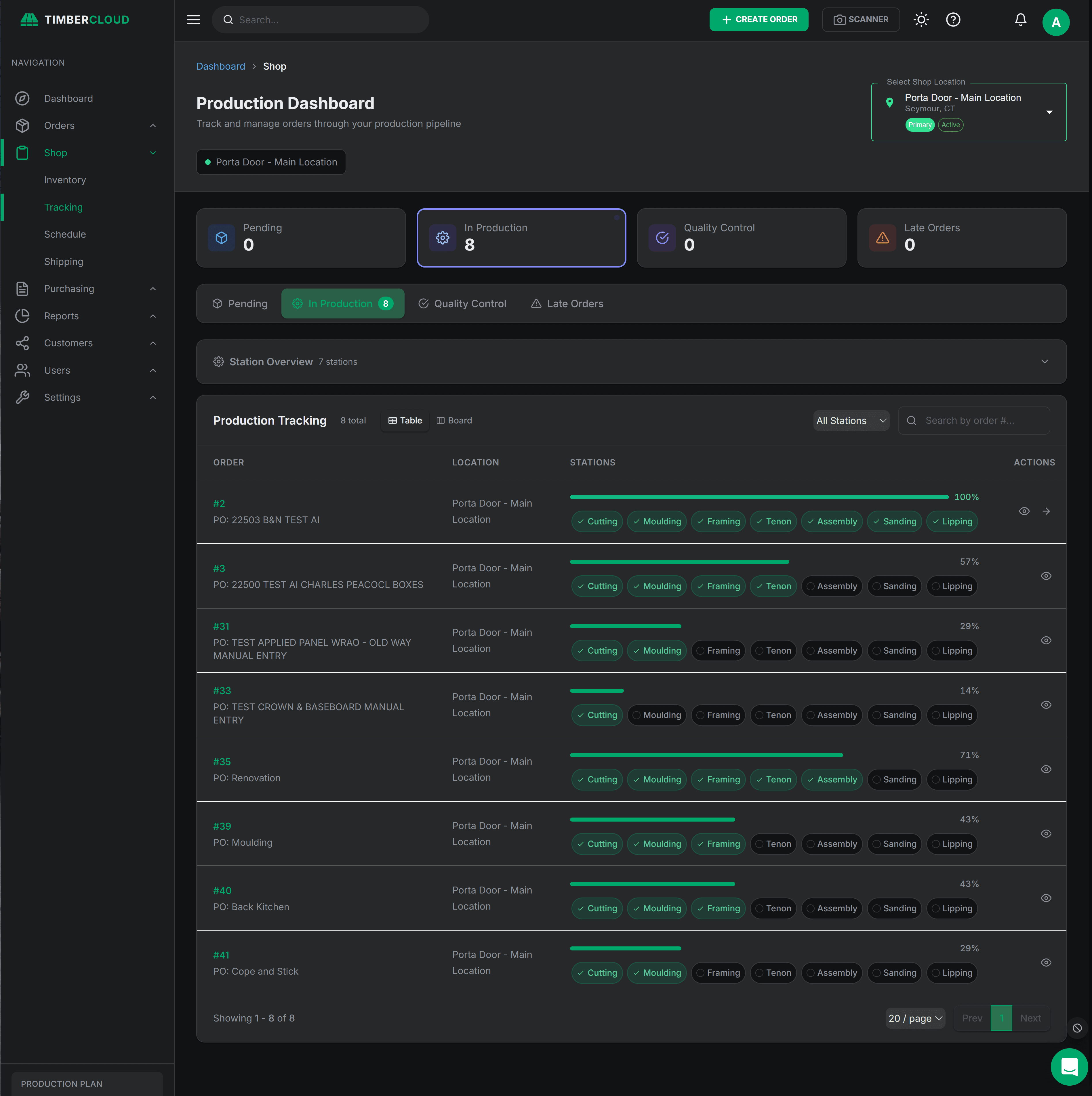
Once an order is placed, TimberCloud turns it into a production job with build sheets, a bill of materials, and cut/mill lists, then tracks it through each stage. Materials are tied to every order, and purchasing keeps profiles, glass, and hardware stocked.
Because doors, windows, and architectural millwork are held to real quality benchmark, the documentation that flows from each order matters, and TimberCloud generates it automatically.
Built in a door shop, for door shops.
TimberCloud's founder grew up inside his family's third generation door shop in Seymour, Connecticut. The configurator, the cut sheets, the lipping and finishing flow: all built by someone who already knew where the job goes sideways.
You can tell, because the software knows a door has a handing before you do. It knows lipping, priming, and finishing are their own stations, not one line on a work order. It knows that a dimension mistyped once becomes a rebuild three weeks later. Every one of those is a scar, not a feature request.
That's the difference between software built for the trade and software built from it.
And the shop where he grew up is the proof. Porta Door is a family-owned custom door shop in Seymour, CT — three generations on the floor, and TimberCloud's first customer. The system Porta Door runs on today is the one he'd wanted for the shop for fifteen years. It took six weeks to cut over from a WordPress-plus-Excel-plus-ShipStation stack. Fifteen hours a week of quote rework, gone. Same-day shipping on a real share of orders. And in six months on the floor, not one forgotten hinge.
One system, from storefront to shipment
Door and window shops usually run a website, a quoting spreadsheet, email orders, and a shipping portal. TimberCloud replaces all of it: a built-in storefront (or an embed on your current site), formula quoting, build-to-order production, inventory, and shipping with live freight and LTL rates for larger units. See the full picture in the Shopify + Katana + ShipStation comparison.
TimberCloud also fits neighboring trades — cabinet makers, architectural millwork, and custom furniture — so a shop that does more than doors runs it all in one place.
Book a demo and we'll configure one of your door or window products live.
Frequently asked questions
- What is door manufacturing software?
Door manufacturing software helps a shop configure, price, and build doors (and often windows and trim) to order. It combines a configurator for size, material, and hardware options, formula-based quoting, and production tools that turn each order into build sheets and job tracking.
- Can customers configure and price doors online?
Yes. TimberCloud's configurator lets customers choose dimensions, materials, glazing, and hardware and see a formula-driven price, then place the order — which arrives priced and production-ready.
- Does it handle windows and trim too, or just doors?
It handles configurable door, window, trim, and moulding products, plus components. The same configurator and pricing engine cover the full range of build-to-order joinery.
- How does it price complex configurations?
A formula pricing engine calculates cost from every variable — size, material, glazing, profile, hardware, and finish — using your rules, so complex configurations are quoted instantly and consistently.