Cabinet Shop Software: Quote, Build, and Ship From One System
Cabinet-specific configuration, automated cut sheets, and a B2B portal for contractor accounts — built on the same data model that runs the floor.
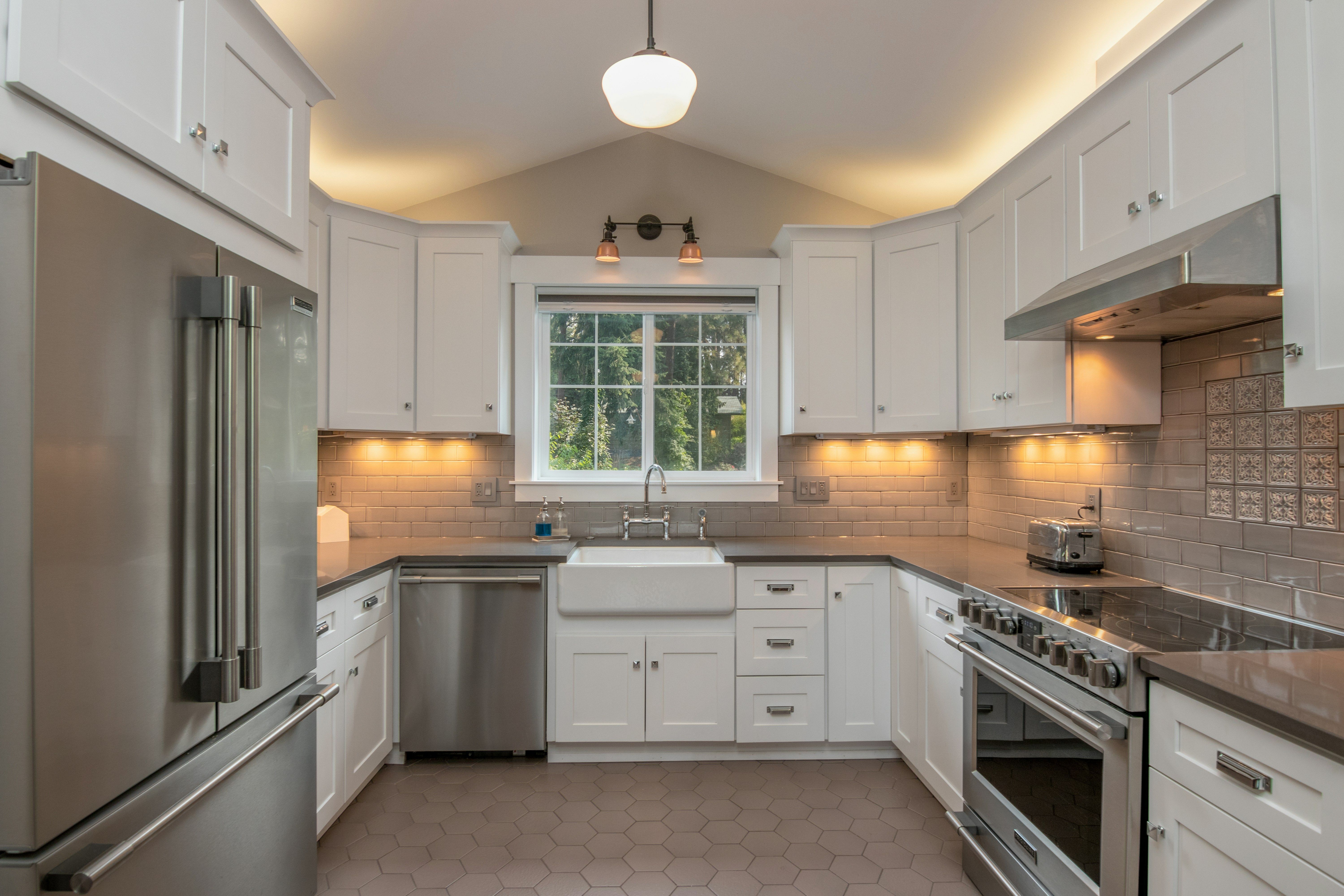
Cabinet shop software manages the full path of a custom cabinet order — from an online quote to cut lists on the shop floor to a shipping label — in one place. TimberCloud is cabinet shop software built for custom cabinet makers: your customer configures a cabinet, your pricing formulas quote it instantly, and the order becomes a production job without anyone re-typing it.
Cabinet shops run on custom dimensions, door styles, materials, and hardware — the opposite of the fixed-SKU world that Shopify and most ERPs were built for. That mismatch is why so many shops still quote in spreadsheets and track jobs on a whiteboard. Cabinet shop software closes the gap between selling custom and building it.
From order to cut list, automatically
The customer's configured order becomes the system of record. That means:
-
Instant, consistent quotes. Formula-based pricing calculates cost from box dimensions, door style, materials, finish, and hardware — so every quote follows the same rules and lands in seconds, not days.
-
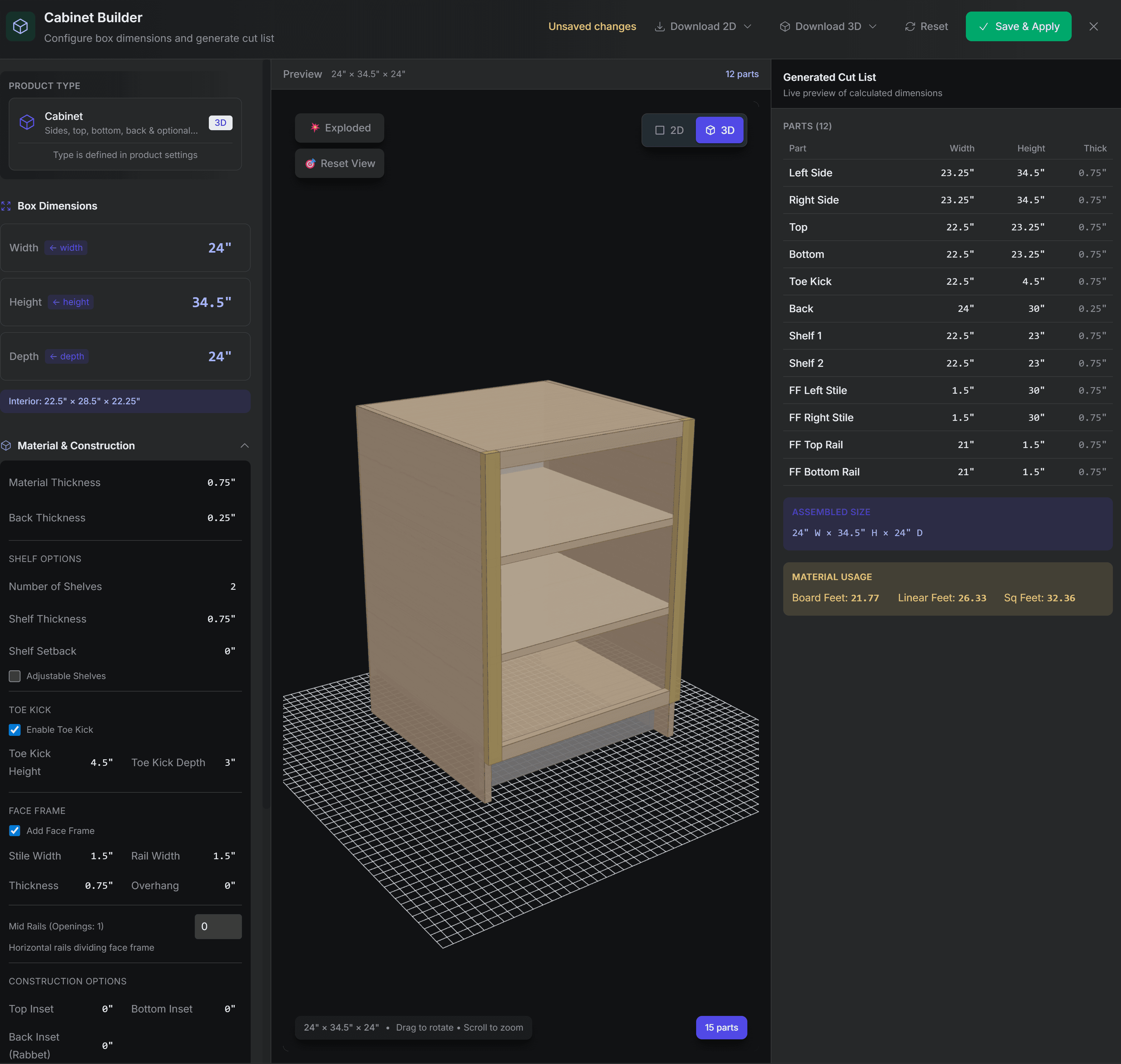
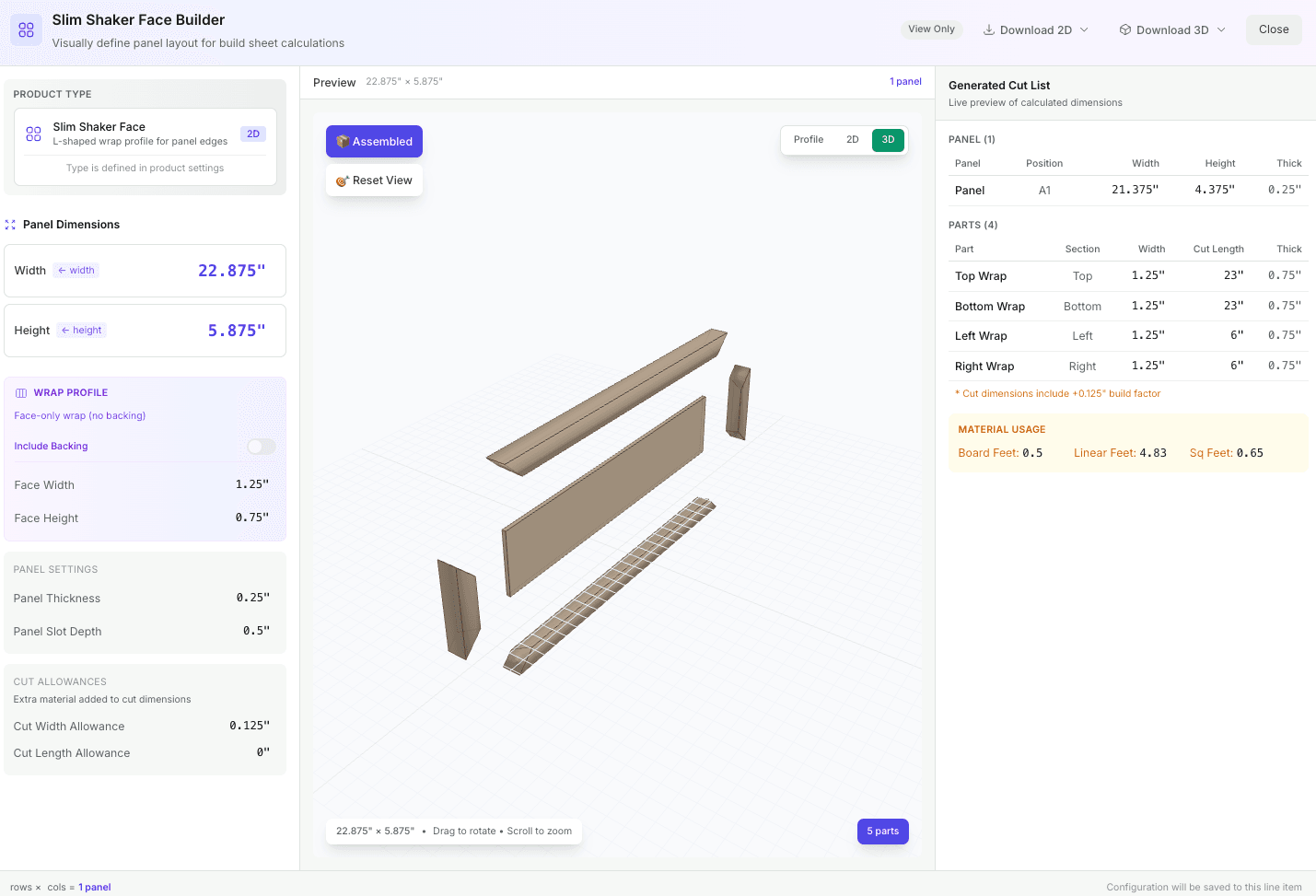
Automatic build documentation. Each order generates build sheets and a bill of materials — cut lists, hardware, and finish specs — ready for the floor.
-
Live production tracking. See every job's stage, spot bottlenecks, and hit promised dates with production tracking.
-
Materials under control. Sheet goods, hardware, and finishes tied to each order, with reorder alerts and one-click purchase orders.
-
Shipping built in. Real carrier rates and labels straight from the order.
Made for custom cabinetry, not generic manufacturing
The details are what separate real cabinet shop software from a repurposed ERP: nested option pricing, per-door-style rules, waste factors on sheet goods, and quoting that mirrors how a shop actually builds a box. TimberCloud was built out of a family cabinet-door and millwork business, so those details are native — not add-ons.
It's also built to the standards cabinet makers already work to. Shops that certify to the KCMA A161.1 performance standard or track industry conditions through the KCMA Trend of Business report need documentation and consistency that spreadsheets can't hold as they grow. In a market where independent cabinet makers alone are ~$2.7B, the shops that scale are the ones that stop re-entering every order.
Sell cabinets online — the right way
TimberCloud includes a full storefront and configurator so customers can configure and order cabinets online, on your domain and branding. Prefer to keep your current site? Embed the storefront with a single snippet. Either way, an online order arrives priced and production-ready.
Cut sheets that read like a cabinet maker wrote them
Standard panels grouped by sheet good. Solid stock listed by board foot. Edge banding listed by linear foot. Hardware listed by SKU and quantity. The cut sheet is built from the configurator, not next to it — so when a customer changes a dimension in their order, the cut sheet updates without you opening anything.
Real cabinet shops, real results
Porta Door — a custom woodworking shop based in Connecticut — replaced a five-tool patchwork stack with TimberCloud. Six weeks to cut over, 15 hours/week of quote rework gone, zero forgotten-hinge incidents in the six months since.
Replace the patchwork
If you're running a website, a spreadsheet quoter, email orders, and a separate shipping portal, TimberCloud replaces the whole stack. See exactly how in the Shopify + Katana + ShipStation comparison, or line it up against tools built for the trade like Allmoxy and Innergy.
Ready to see it on your cabinet shop? Book a demo and we'll run one of your real products end to end.
Frequently Asked Questions
- What is cabinet shop software?
Cabinet shop software helps custom cabinet makers quote, sell, and build to order. It combines configurable pricing, cut lists and bills of materials, production tracking, and often an online storefront, so one order drives the whole process instead of living in separate tools.
- How is TimberCloud different from Shopify or a generic ERP?
Shopify sells fixed products from a shelf; generic ERPs are back-office-first and expensive. Cabinet shop software like TimberCloud is built around custom dimensions, option pricing, and build-to-order production, and connects the customer's order directly to the shop floor.
- Can it generate cut lists and bills of materials automatically?
Yes. Every configured order automatically produces build sheets, cut lists, hardware lists, and finish specs, and they update instantly if the order changes.
- Does TimberCloud handle online cabinet sales?
Yes. It includes a storefront and configurator so customers can order custom cabinets online — hosted for you or embedded on your existing website — with pricing calculated automatically.