How to Sell Custom Cabinets Online: The 2026 Guide
If you build custom cabinets, you already know the hard part isn't building them; it's selling them without drowning in back-and-forth. A customer emails rough dimensions. You retype them into a spreadsheet. You price it by hand. You send a number back. They switch the door style. You start over.
Multiply that by every job and you've lost most of a day every week before you've cut a single sheet.
Learning to sell cabinets online is how you get that day back — as long as you do it in a way that fits custom work instead of fighting it. This guide walks through exactly how custom shops sell configurable cabinets online in 2026: the configurator, the pricing, the deposit, the lead time, and the hand-off to the floor — without losing control of what actually gets built.
Can you really sell custom cabinets online in 2026?
Yes. The old objection — "my product is custom, so it can't go online" — was never really true. It just meant the tools weren't built for you.
Selling online doesn't mean forcing your cabinets into fixed SKUs like they're t-shirts. It means putting your options — sizes, materials, door styles, hardware, finishes — in front of the customer as choices, and letting them build the order themselves. You still build custom. You just stop being the person who hand-types every request into a quote.
That shift is the whole game, and it's what a real product configurator is for.
Why does selling cabinets online break down for custom shops?
Most general e-commerce tools assume a fixed price on a fixed product. Shopify can sell a $200 stock cabinet all day. It can't price a 34‑1/2" frameless base in walnut with soft-close slides and a custom toe kick — because that price doesn't exist until someone works it out.
So shops do the reasonable thing: they slap a "Request a Quote" button on the site. And that button quietly moves all the work back onto you. Every online "order" lands in your inbox as a starting point for the same manual quoting you were trying to escape.
That retype step — customer's numbers into your spreadsheet, your spreadsheet into an email — is where the hours go, and where the costly mistypes happen. A single wrong dimension can send a whole cabinet back to the saw. Fix that step and most of the pain disappears with it.
What do you actually need to sell cabinets online?
Five pieces. Miss any one of them and you're back to quoting by hand.
1. A configurator, not a contact form
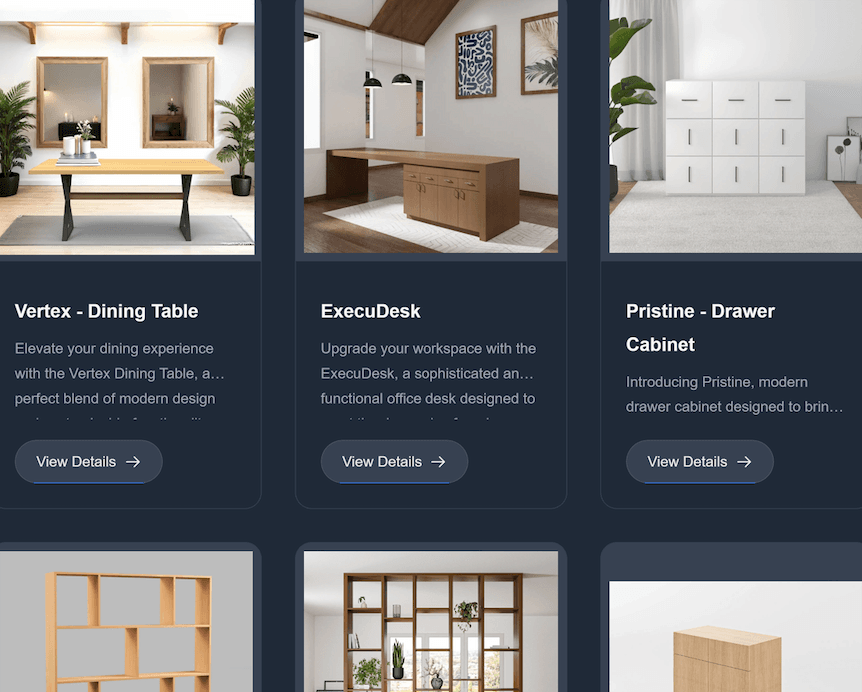
The customer needs to build the cabinet themselves — pick the box, the size, the material, the door, the hardware — and see it come together. A configurator turns your catalog into something people can actually order, instead of a gallery that generates emails. This is the front door of selling online, and it's the core of TimberCloud's Commerce tier.
2. Formula pricing, not a hand-typed quote
This is the part that makes custom sellable. Instead of pricing each job by hand, you set the rules once — by square foot, board foot, per unit, or a pricing matrix — and the system prices every configuration on the spot. The customer sees a real number. You never touch a calculator. The quote-and-retype step just disappears.
That's the difference between faster quoting and no quoting. You want the second one.
3. Deposits, not full payment up front
Custom work isn't a checkout-and-ship transaction, and your payment terms shouldn't pretend it is. Take a deposit to lock the job — enough to cover materials and hold the slot — with the balance due at your milestone. Card and ACH deposits run through Stripe built into the order, so the money's collected the moment the customer commits, not three follow-up emails later.
4. Lead times customers can see
Half the "where's my order?" calls come from a customer who never knew the timeline in the first place. Set a realistic lead time on the product and show it before they buy. You set expectations once, up front, instead of defending them one phone call at a time.
5. A clean hand-off to production
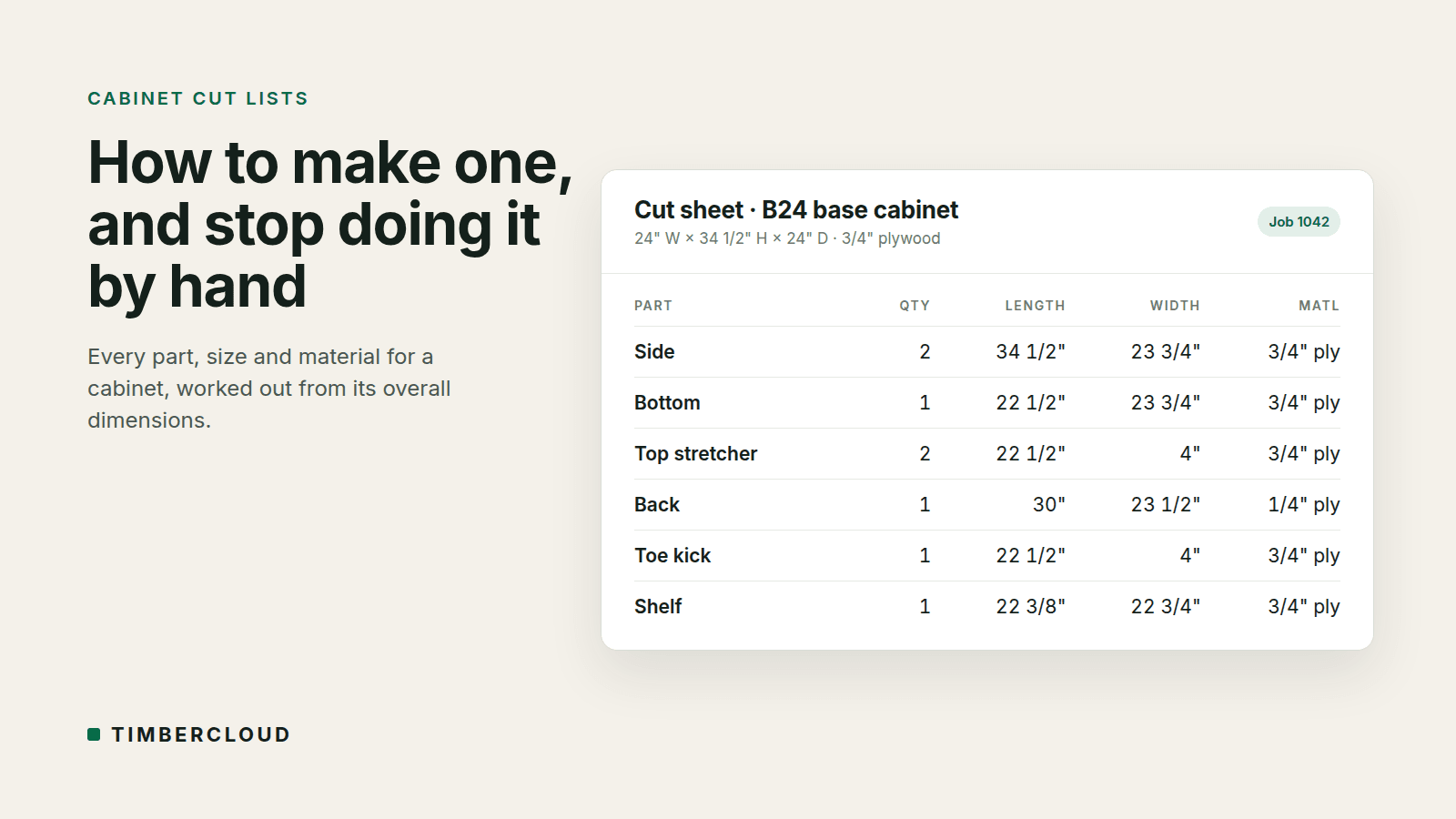
Here's the one most tools skip — and it's the one that protects you. The online order has to become a build the floor can actually run: a cut list, a build sheet, the specs, without anyone re-entering anything. That hand-off is exactly what TimberCloud's Build tier does — the order the customer configured turns into the sheet your shop builds from.
That's what "without losing control of production" means in practice. Selling online doesn't lower your spec — your builds still hit the same standard they always did, whether or not you carry a formal cert like the ANSI/KCMA A161.1 mark. The customer's choices just flow straight to the bench instead of getting lost in a reply-all thread.
Do you need Shopify, Katana, and ShipStation to pull this off?
You can absolutely wire together a storefront, an inventory tool, a shipping tool, and a couple of spreadsheets. Plenty of shops do. The catch: you become the integration. Every one of those tools has to talk to the next, and when a customer changes a door style, you're the one making sure that change survives the trip from cart to cut sheet.
The alternative is running the whole thing — configure, price, order, build, ship — from one place, so the order the customer builds is the same order your shop builds and the same order that gets shipped. Nothing gets retyped, and nothing falls between two apps that were never really designed to talk. That's the case for a single system over a stack of five; you can see how the tiers line up on the pricing page.
How long does it take to start selling cabinets online?
Standing up a storefront is fast — you can get a catalog configurable and taking orders far quicker than most shop owners expect. The longer part is cutting your actual process over: getting your pricing rules dialed in and trusting the online orders enough to run them straight to the floor.
For a real reference point: Porta Door, a custom door shop in Seymour, CT, fully cut over in about six weeks — and cut roughly 15 hours a week of quote rework in the process. That's most of a workday, every week, back in the owner's hands. Not because they worked faster. Because they stopped doing the retype step at all.
The broader market is moving this way too — configurable, buy-online custom manufacturing is one of the clearer trends running through industry coverage at outlets like Woodworking Network and across the show floor at events like IWF Atlanta. The shops that get online first are the ones setting the customer's expectation for what buying custom is supposed to feel like.
Frequently asked questions
Can you sell custom cabinets online without giving a quote first? Yes — that's the entire point of doing it right. With formula-based pricing, the customer configures the cabinet and sees a real price immediately, so there's no quote to write and no number to retype. You set the pricing rules once instead of pricing each job by hand.
How do you price custom cabinets on a website? You define pricing rules — by square foot, board foot, per unit, or a matrix — and a configurator applies them to every combination of size, material, and options the customer picks. The price updates live as they build the order.
How do you handle deposits and payment for custom cabinet orders? Take a deposit at checkout to lock the job, with the balance due at a milestone you set. Payments run through Stripe inside the order, so you collect when the customer commits rather than chasing an invoice later.
Do customers actually buy custom cabinets online? They do — B2B buyers (designers, builders, contractors) and homeowners both. What they want is a clear price, a real lead time, and confidence the order is right. A configurator gives them all three, which is often more reassuring than a phone quote.
What's the best software to sell cabinets online? Look for one system that covers all five pieces — configurator, formula pricing, deposits, lead times, and a clean hand-off to production — so the order the customer builds is the order your shop builds. TimberCloud was built for exactly this: custom manufacturers selling configurable products online and running the shop floor from the same place.
See it running
The fastest way to understand this is to watch a configurable cabinet get priced and turned into a build sheet in real time.
Book a 30-minute demo → and see the configurator, formula pricing, and production hand-off end to end.
Coming to Atlanta in August? Meet us at IWF → — Booth BC410, Hall BC.
Sell online. Build custom. Ship live.
Frequently asked questions
Yes — that's the entire point of doing it right. With formula-based pricing, the customer configures the cabinet and sees a real price immediately, so there's no quote to write and no number to retype. You set the pricing rules once instead of pricing each job by hand.
You define pricing rules — by square foot, board foot, per unit, or a matrix — and a configurator applies them to every combination of size, material, and options the customer picks. The price updates live as they build the order.
Take a deposit at checkout to lock the job, with the balance due at a milestone you set. Payments run through Stripe inside the order, so you collect when the customer commits rather than chasing an invoice later.
They do — B2B buyers (designers, builders, contractors) and homeowners both. What they want is a clear price, a real lead time, and confidence the order is right. A configurator gives them all three, which is often more reassuring than a phone quote.
Look for one system that covers all five pieces — configurator, formula pricing, deposits, lead times, and a clean hand-off to production — so the order the customer builds is the order your shop builds. TimberCloud was built for exactly this: custom manufacturers selling configurable products online and running the shop floor from the same place.
TimberCloud Team
Content Team
The TimberCloud team is dedicated to helping manufacturers streamline their operations with intelligent software solutions.