Woodworking Project Planner: Streamline Builds and Boost Profits

A modern woodworking project planner isn't just another piece of software. It’s the central nervous system that takes your shop from a mess of scattered notes and guesswork to a single, unified system for every job you run. Think of it as the tool that finally connects your designs, your materials, and your production schedule, driving up both your efficiency and your bottom line.
This shift isn't just about going digital; in today's market, it's about survival.
Why Your Old Planning Methods Are Quietly Killing Your Business

Let’s be real for a minute. That familiar chaos of scribbled-on 2x4s, napkin sketches, and manual calculations is holding your shop back. It's a scene every custom woodworker recognizes: a desk buried under drawings, a whiteboard full of half-erased measurements, and that nagging fear in your gut that one tiny mistake will blow up an entire project.
This old-school approach feels comfortable, but it's incredibly expensive. Every time a measurement is off, you’re throwing away good material. When project details get lost in translation, you’re hit with production delays and frustrating, costly rework. It's the hidden tax you pay for sticking with the old ways.
The Real-World Cost of Disorganization
Before shop management tools became more accessible, the waste was staggering. In the years before digital planners really took hold around 2015, it wasn't unheard of for small and mid-sized shops to report up to 25% material waste from simple miscalculations alone. As the global woodworking machinery market continues to grow, that kind of inefficiency just isn't sustainable if you want to stay competitive.
These little slip-ups create a domino effect that impacts your entire operation:
- Wasted Materials: One wrong number on a cut list is all it takes to turn a beautiful, expensive sheet of walnut plywood into a pile of scrap. Across multiple jobs, that adds up fast.
- Lost Labor Hours: When your crew has to stop what they're doing to decipher confusing instructions or re-cut parts, you're paying them for time that isn't making you money. It's a direct hit to your profit margin.
- Inaccurate Quotes: Pricing a custom job on a hunch is a surefire way to lose. If you underbid, you’re essentially working for free. If you overbid, you lose the job to a competitor who has their numbers dialed in.
- Unhappy Clients: Nothing erodes customer trust faster than delays and mistakes. It kills your reputation and makes getting that crucial repeat business and word-of-mouth referrals nearly impossible.
See the stark contrast between the inefficiencies of traditional methods and the streamlined gains from a modern digital planner.
Comparing Old vs. New Woodworking Project Planning
| Planning Task | Traditional Method (The Pain) | Modern Planner (The Gain) |
|---|---|---|
| Project Scoping | Back-of-the-napkin sketches, forgotten details | Centralized client notes, digital mood boards |
| Material List | Manual calculations, guesstimates, frequent errors | Automated Bill of Materials from the design |
| Cut Lists | Hours of manual entry, high risk of typos | Instantly generated, optimized for minimal waste |
| Quoting | Rough estimates, "finger in the wind" pricing | Dynamic quotes based on real material & labor costs |
| Shop Floor | Verbal instructions, confusing handwritten notes | Clear digital work orders sent to tablets or stations |
The table makes it pretty clear. One path leads to constant firefighting, while the other paves the way for smooth, profitable production.
A Breaking Point for Every Custom Shop
Picture this: a shop owner is trying to juggle three big custom jobs at once. There's a full set of shaker kitchen cabinets, a massive live-edge dining table, and a complicated built-in library. Each one has its own unique hardware, finish schedule, and client demands.
He spends half a day creating manual cut lists, only to realize later that he completely forgot to account for grain direction on the cabinet doors. The plywood is already cut.
The breaking point isn't usually one big, dramatic failure. It’s the slow, grinding realization that you're spending all your time putting out fires instead of building beautiful furniture. You're working harder than ever, but the profits just aren't there to show for it.
This constant struggle is a flashing red light that the old methods have hit their limit. To break out of this cycle, many shops are now adopting construction management software and other modern tools. A dedicated woodworking project planner becomes a necessity—not a luxury, but a fundamental tool for survival and growth.
Turning a Blueprint Into a Paycheck
This is where the rubber meets the road. The journey from a client's idea on a napkin to a profitable, finished piece is what separates the pros from the hobbyists. It's not about rough sketches and ballpark figures anymore. In a modern shop, success starts by translating that concept into a rock-solid, actionable plan.
Your woodworking project planner is the tool that makes this happen. This is where you bake profitability into the job from day one. By meticulously scoping every detail upfront—every dimension, every piece of joinery, the exact hardware, even the finishing schedule—you eliminate the guesswork that eats away at your margins. It’s how you build trust with your client and get everyone on the same page before a single board is cut.
From Blueprint to Bill of Materials in a Flash
Think about the last time you got a detailed set of plans for a custom kitchen. The old way meant spending hours hunched over the drawings, manually listing out every single component and calculating your material needs. It was a grind, and it was so easy to make a mistake. Forgetting one set of drawer slides or miscalculating a panel size could derail the entire project.
Today, smart project planning software does the heavy lifting for you. You can upload a CAD file or use built-in design tools, and the system instantly gets to work parsing the blueprint. It intelligently identifies every part, pulls the dimensions, and even matches them against product templates you’ve already set up.
For that kitchen cabinet project, the software would automatically:
- Pinpoint every cabinet box, face frame, door, and drawer front.
- Pull the exact height, width, and depth for each part.
- Recognize material callouts like "3/4" Walnut Plywood" or "Solid Maple."
- Identify all the necessary hardware, from hinges and pulls to drawer slides.
The result? You get a perfectly accurate Bill of Materials (BOM) in minutes, not hours. This isn't just a parts list; it's the DNA of your entire production plan.
Tying Your BOM to Your Live Inventory
A BOM is a huge step, but its real magic is unleashed when you connect it directly to your live inventory. A standalone parts list just creates more work. You're still left asking: Do we have this in stock? What do we need to order? What’s our actual material cost for this job?
A connected system gives you those answers instantly. As the BOM is generated, your planning software automatically checks each required item against your current stock levels. This gives you a real-time picture of where you stand.
This inventory check is the moment a project goes from being an idea to a predictable, cost-controlled operation. You immediately see your exact material costs, know the lead times for parts you need to order, and can spot potential supply chain headaches before you’ve committed to a deadline or a final price.
This kind of real-time visibility is a total game-changer. Forget walking the shop with a clipboard or trying to trust an outdated spreadsheet. Instead, you get an immediate, color-coded report. You might see you have plenty of maple for the face frames but are short on the walnut plywood for the cabinet boxes. With a single click, you can create a purchase order for the exact amount you need, stopping both over-buying and last-minute panic runs to the supplier.
A Practical Example: Kitchen Cabinet Set
Let's see how this plays out for a simple set of three base cabinets. After analyzing the plans, your planner generates the BOM and instantly maps it to what you have on the shelf:
| Item | Quantity Required | In Stock | Status |
|---|---|---|---|
| Walnut Plywood (4'x8' sheet) | 5 | 2 | Order 3 |
| Solid Maple (1"x6"x8') | 12 boards | 20 | In Stock |
| Blum Soft-Close Hinges | 12 pairs | 8 pairs | Order 4 |
| 18" Drawer Slides | 6 pairs | 10 pairs | In Stock |
This simple table, created automatically, gives you more clarity than an hour of manual work ever could. You've just quantified your costs, locked down your purchasing needs, and built a reliable foundation for accurate pricing and scheduling. This is how successful shops use a woodworking project planner to make sure every job starts off on the right foot—and stays profitable.
From Pencil and Paper to Perfect Cuts: Automating Your Cut Sheets

Once your Bill of Materials is nailed down, the next big hurdle is turning that list of parts into a smart cutting plan. For years, this meant grabbing a pencil and a calculator and spending hours trying to puzzle-piece parts onto plywood sheets or figure out the most efficient way to chop up hardwood. It's a slow, agonizing process that’s just begging for expensive mistakes and a pile of useless offcuts.
This is where a modern woodworking project planner really starts to shine. That tedious manual work of creating cut lists becomes a fast, automated, and frankly, much smarter process. The software grabs the exact sizes from your BOM and, using some pretty powerful logic, spits out an optimized cutting diagram in seconds.
And this isn't just about saving an hour of office time. The real win happens out on the shop floor, where these optimized plans can slash your material waste by 15% or more. When you're cutting into pricey materials like quarter-sawn white oak or architectural veneers, those savings go straight to your bottom line.
How Smart "Nesting" Saves You Money
Think about it like this: anyone can pack a moving truck, but a professional mover will do it faster, fit more in, and break fewer things. Automated cut sheet software is that pro. It runs through thousands of layout possibilities to find the absolute most efficient way to cut your parts.
This optimization process, what we call nesting, juggles several critical details all at once:
- Part Sizes: It knows the exact length and width of every single component.
- Your Stock: It works with the real-world dimensions of your inventory, whether that's 4x8 sheets or random-width lumber.
- Blade Kerf: The software automatically factors in the material your saw blade will chew up, so your final parts are dead-on accurate.
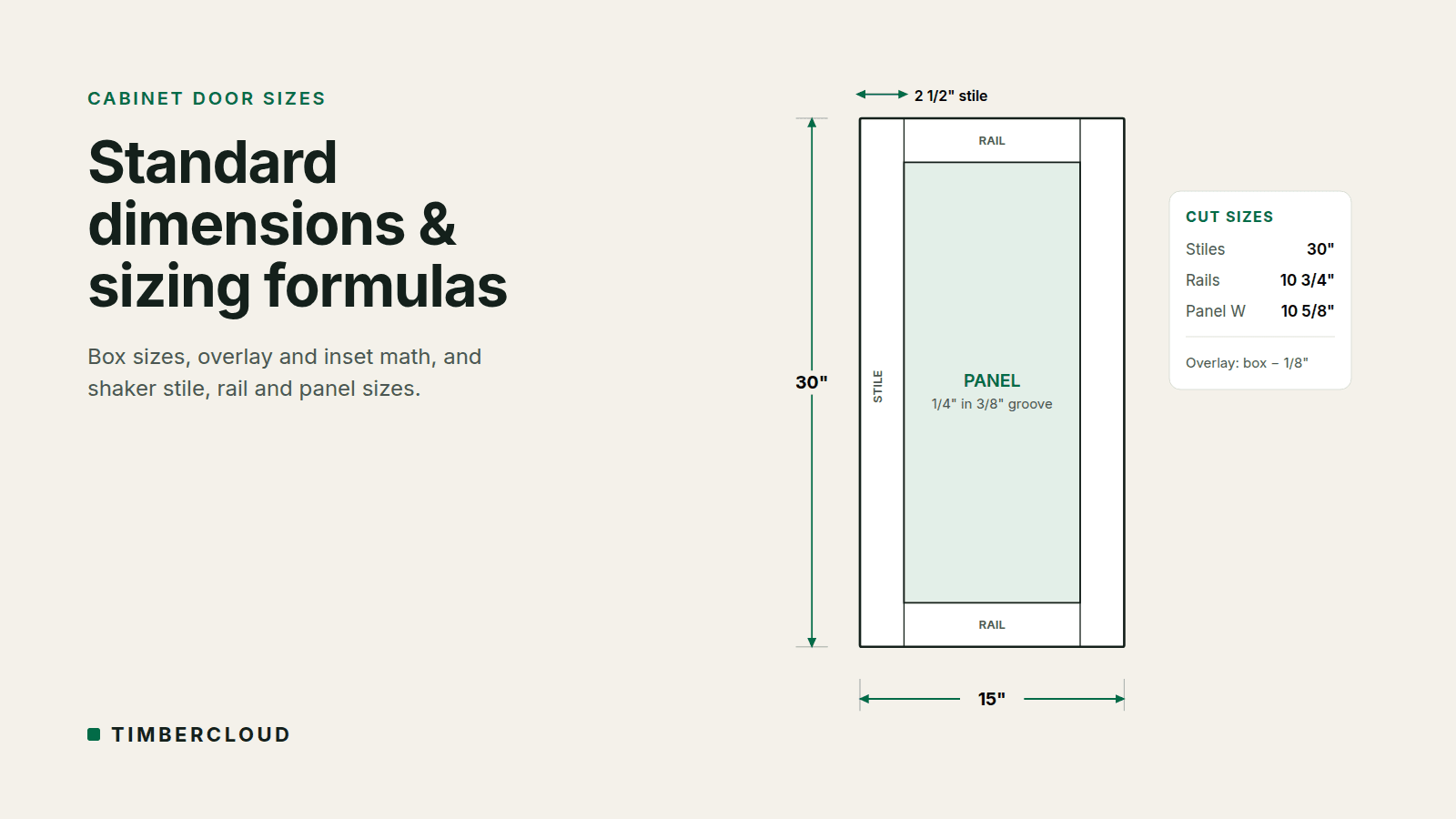
- Grain Direction: Need the grain to run a specific way on your cabinet doors? You can flag those parts, and the software will orient them perfectly.
What you get is a crystal-clear, visual map for cutting that anyone on your team can understand. It doesn't matter if they're at a table saw or running a CNC router. This totally removes the guesswork that leads to miscuts. The whole process starts with a solid BOM; if you want to dig deeper, check out our guide on how to use a Bill of Materials template.
A Real-World Gut Check: Manual vs. Automated
Let's put this into perspective with a common job, like a complex built-in bookcase. Manually, I’ve seen seasoned guys spend two or three hours sketching out a cut list, trying their best to maximize yield. Even with decades of experience, one wrong number or a forgotten part can send the whole project off the rails.
Now, feed that same project into a planner. You’ll have a complete, optimized cut list in less than a minute. More importantly, the software’s layout is almost always tighter, often saving an entire sheet of plywood or a few precious hardwood boards on a single job. You're not just saving payroll hours; you're getting more out of the expensive materials you've already paid for.
"Before we had this, rework from bad cuts was our number one headache. At least once a week, we were re-cutting parts because of a math error on a cut list. Since we automated our cut sheets, that problem has virtually disappeared. The guys on the floor trust the plans, and our waste bin is a lot emptier."
That quote from a shop foreman says it all. This is about creating a system that’s more reliable and a lot less frustrating for everyone involved. The automated cut sheet is the perfect link between your digital design and the physical work, ensuring the precision you planned for is exactly what gets built.
Winning More Jobs with Dynamic Pricing and Instant Quotes
Let's be honest, the old way of quoting is killing your shop's momentum. Taking days, or even a week, to pencil out a price for a custom job doesn't just frustrate clients—it gives your competition a massive head start. In a world where customers expect answers now, your woodworking project planner has to do more than just manage shop tasks. It needs to become your secret weapon for sales.
When you connect your planning process directly to your sales front-end, you can deliver precise, profitable quotes in minutes. This isn't just about being fast. It's about building immediate trust and closing the deal before anyone else even gets their spreadsheet open.
How a Connected Planner Generates Instant Quotes
Think about all the information you've already put into your system. It's all there: the detailed Bill of Materials, your standard labor times, and maybe even live material costs from your suppliers. A truly integrated system pulls all of this together automatically when a quote is requested. No more guesstimating, no more forgetting to add the cost of fasteners or that extra finishing step. It’s all accounted for.
This stops the guessing game that so many shops are forced to play. You avoid the two biggest pitfalls of quoting: underbidding and working for free, or overbidding and losing the job. You get a level of precision that's just not possible with a legal pad and a calculator.
The opportunity here is huge. The wood processing machine market is projected to grow from USD 5.5 billion in 2025 to USD 8.6 billion by 2035. To grab your piece of that pie, you have to be efficient. We saw how the e-commerce boom drove a 41.4% spike in U.S. furniture sales; customers are comfortable buying online, but they want customization and clarity. By integrating dynamic pricing, you turn that online interest into real, profitable work and avoid the 15-20% of projects that go over budget because of a bad initial quote. You can read more about these woodworking market trends and their impact on shops.
A Practical Example: A Configurable Dining Table
Picture a client on your website, playing around with options for a new dining table. They're not just window shopping; they are actively designing their dream piece, and your website is guiding them through it.
As they click through different choices, your pricing updates instantly.
- Size Change: They stretch the design from 72" to a 96" banquet size. The system immediately recalculates the board footage and adjusts the price.
- Material Swap: They decide to upgrade from Red Oak to a beautiful, premium Walnut. The planner taps into your live material costs and shows the new price right away.
- Finish Options: They opt for a hand-rubbed oil finish instead of a standard poly coat. The extra labor and material costs are automatically factored in.
What the client sees is a fun, interactive design experience. What's happening on your end is a sophisticated calculation based on your actual production data—product templates, inventory levels, and preset pricing rules. Every single quote is guaranteed to be accurate and profitable. For a deeper look at how this works, check out our guide to a configure-price-quote solution.
From Sales Tool to Production Plan
The magic doesn't stop once the client clicks "approve." Because that quote was built on a solid foundation of real production data, it instantly becomes a clear, actionable work order for your team.
This is the ultimate efficiency loop. The same data used to win the job is immediately used to build the job. There's no re-entry, no translation errors, and no time wasted getting the project onto the shop floor.
The approved BOM, the optimized cut sheets, and all the specified hardware are already organized and waiting. This direct handoff from sales to production closes the communication gaps that cause so many delays and mistakes. You're not just quoting faster; you're starting projects faster and with fewer errors. That’s a real competitive edge.
Taking the Project From Quote to Crate
Once the client gives you the green light, the real dance begins. This is the moment your project planner stops being a sales tool and becomes the nerve center for your entire shop floor. It’s all about turning that digital blueprint into a physical masterpiece, without anything getting lost in translation.
Honestly, the smooth handoff from an approved quote to a live work order is what separates the pros from the shops that always seem to be fighting fires. A good system gives you a clear, transparent path for every job, letting you see exactly where things stand from the first cut to the final wrap.
The Digital Work Order: Your Shop's Single Source of Truth
Forget handing your foreman a messy folder of papers and a quick verbal rundown. In a modern shop, the digital work order is the definitive guide for every single project. Your team can pull up everything they need on a tablet or a shop-floor monitor—no more guessing games.
This isn't just about scanning a paper traveler. A truly useful work order, baked into your planning software, should be packed with actionable details:
- Finalized Cut Sheets: The exact, optimized diagrams for everything from your table saw to the CNC router.
- Assembly Blueprints: Detailed steps, clarifying joinery types and any tricky sequences.
- Hardware & Finishing Specs: No more confusion about which hinges to use or what the final sheen should be. It’s all there.
- Built-in Quality Gates: Mandatory checkpoints to make sure your standards are being met at every stage.
Think of it this way: a well-managed project planner helps you master the entire build process, from design to delivery. It’s a lot like the principles of improving warehouse efficiency; you’re just applying that same focus on optimization to your production workflow.
This visual shows how the initial planning data—the bill of materials and your pricing rules—flows directly into an instant, accurate quote.

The big takeaway here is that quoting isn't a separate, time-consuming chore. It's a natural result of solid upfront planning.
Real-Time Eyes on the Shop Floor
Imagine knowing the exact status of every single job without ever leaving your desk. A connected system makes that a reality. As your crew completes tasks and signs off on quality checks, the project status updates instantly for everyone to see.
This kind of transparency is a game-changer. The wood and timber products market is valued at nearly $1 trillion, so every bit of efficiency counts. We’ve seen studies showing that shops without integrated work order systems can lose 10-15% of their productive time—a massive hit to the bottom line. It’s not just for us; e-commerce businesses have proven that clear status tracking can cut customer disputes by 25%.
Being able to see that a cabinet has moved from the finishing booth to the packaging station isn’t just a cool feature. It’s what lets you give clients confident updates, manage your production schedule without guessing, and spot bottlenecks before they derail your entire week.
This constant flow of information is what modern manufacturing is all about. If you're looking to really dial in your own processes, our article on planning production with software has some great strategies.
Building Quality Directly Into the Workflow
Quality can't be something you just inspect at the end. You have to build it into the process, step by step. A smart project planner lets you embed mandatory quality checkpoints right inside the digital work order.
Think of it as a digital checklist that won't let a project move to the next stage until your standards are met.
- Post-Cut Verification: Are all parts cut to the right dimensions? A team member has to verify and digitally sign off before they move to assembly.
- Pre-Assembly Review: Are all the components, hardware, and fasteners present and accounted for? This one simple check prevents so many mid-build delays.
- Finish Approval: Does the stain color and sheen perfectly match the client’s spec? This check happens before the final topcoat, when it’s still easy to make a correction.
- Final Inspection: A final, comprehensive review against the original order before a piece gets the green light for shipping.
By making quality an active part of the workflow, you catch tiny issues before they become huge, expensive headaches. This approach doesn't just guarantee a better final product; it builds a culture of accountability and pride across your whole team. You stop reacting to problems and start preventing them.
Got Questions? Let's Get Real About Woodworking Planners.
Okay, let's talk about what's really holding you back. You've seen how a proper planning system can change the game, but you're a builder, not a tech guru. You’re skeptical, and you should be. You've got practical questions that need straight answers before you even think about changing how you run your shop.
These are the same hurdles every shop owner I've worked with has had to clear. Getting honest answers is the only way to move forward with confidence, so let's cut through the noise.
How Much Time Will This Actually Take to Learn?
Let's be honest: any new tool has a learning curve. You didn't master your router on day one, and you won't become a software wizard overnight. The real question isn't if you have to learn something new, but how steep the climb is and if the view from the top is worth it.
The initial setup is usually the heaviest lift. This is where you’ll put in a few focused days to:
- Load in your current material inventory and pricing.
- Build out some basic templates for your go-to projects (e.g., a standard shaker cabinet box).
- Dial in your labor rates and profit margins.
Once that foundation is built, the day-to-day stuff gets ridiculously fast. A quote that used to take you two hours on a spreadsheet can be knocked out in minutes. A cut list becomes a one-click affair instead of an evening of manual calculations. That initial time investment pays you back, and fast.
The trick is to not try and become a power user on day one. Start by just using it for quoting. Once that feels natural, use it to generate your cut lists. Then move on to production tracking. Bite-sized pieces make the whole process feel a lot less intimidating.
Will This Play Nice with My Other Tools?
This is a big one. You've already got money and time tied up in your CAD program or CNC machine. The last thing you need is some new system that walls itself off and refuses to talk to your existing equipment.
Good news: the best project planners are built to be a central hub, not an isolated island. Integration is the name of the game. For example, a solid planner will let you import files directly from design software like SketchUp or AutoCAD.
It takes that design, helps you generate the bill of materials and optimized cut list, and then can export a file (like a DXF) that’s ready to be loaded right into your CNC software. It’s all about creating a seamless bridge from design to production and killing the manual data entry that causes so many costly mistakes.
How Do I Know This Will Actually Pay for Itself?
A monthly subscription can feel like just another bill draining your account. But a project planner is a true investment, not an expense. The return shows up in real dollars you can see in your bank account.
Let's break down where the money comes from:
- Drastically Reduced Material Waste: If automated cut lists save you just 10% on panel stock—which is a very conservative number—what does that add up to over a year? For most shops, that savings alone can cover the entire cost of the software.
- More Jobs Won, Faster: When you can turn around accurate quotes in hours instead of days, you win more bids. Landing just one or two extra projects a year that you were previously too slow to quote on can deliver a huge return.
- No More "Free" Work: We've all been there—underbidding a job and realizing halfway through that you're working for free. A planner makes sure every component, every piece of hardware, and every minute of labor is accounted for, protecting your profit margin on every single project.
The question isn't, "Can I afford another subscription?" It's, "Can I afford to keep throwing away material, losing jobs to faster shops, and eating the cost of quoting errors?"
What if My Shop Grows? Or Shrinks?
Whether you're a one-person show trying to do it all or a growing team of ten, you need a tool that flexes with you. The absolute last thing you want is to get locked into a system you'll outgrow in two years.
A well-built woodworking planner is designed for exactly this kind of scalability.
- For the Solo Woodworker: It’s your project manager, estimator, and bookkeeper all rolled into one. It handles the administrative grind so you can spend more time on the tools.
- For the Growing Shop: It becomes the single source of truth. The office, the foreman, and the new guy on the assembly table are all working from the same, up-to-the-minute plans. This is absolutely critical for maintaining quality as you scale up.
The right system supports your growth instead of getting in the way. It allows you to add people, manage more complex jobs, and increase your output without the whole operation flying off the rails.
Ready to see how an all-in-one platform can put these concerns to rest and drive real growth for your shop? TimberCloud, Inc. combines powerful planning tools with e-commerce and shop floor execution, giving you a clear path to profitability. Start streamlining your workflow today.
Topics
TimberCloud Team
Content Team
The TimberCloud team is dedicated to helping manufacturers streamline their operations with intelligent software solutions.