10 B2B Ecommerce Best Practices for Woodworking in 2025

The standard B2C ecommerce playbook doesn't work for custom manufacturing and woodworking. Selling configurable cabinets, architectural millwork, or specialized furniture involves complexities far beyond a simple "add to cart" transaction. Your customers aren't impulse buyers; they are businesses with specific procurement processes, tiered pricing agreements, and complex project requirements. A generic storefront fails to address account-based purchasing, custom quotes, and the deep integration needed with your ERP and production floor systems.
This guide moves beyond generic advice to provide a tactical roadmap. We'll detail ten b2b ecommerce best practices designed specifically for the unique challenges of your industry. You will learn how to build a self-service portal that empowers your clients, implement dynamic pricing that protects your margins, and integrate your digital storefront directly with your backend operations for seamless order fulfillment.
From streamlining procurement to enhancing cybersecurity, each point is designed to be actionable. The goal is to transform your website from a simple digital brochure into a powerful, efficient B2B sales and operations machine. These strategies will help you reduce administrative overhead, improve customer loyalty, and scale your business effectively. Let's dive into the essential practices that will set you apart.
1. Implement Robust Account-Based Management (ABM)
Account-Based Management (ABM) shifts your focus from casting a wide net to spearfishing high-value accounts. Instead of marketing to a broad audience, you treat each target account as a market of one. This involves creating a highly personalized buying experience tailored to the specific needs, challenges, and team members of a single company, a crucial strategy among B2B ecommerce best practices.

For a custom woodworking shop, this could mean creating a private, branded portal for a large construction contractor. This portal would feature their negotiated contract pricing, pre-approved product configurations, and a gallery of past projects you’ve completed for them. This level of personalization streamlines their procurement process and strengthens loyalty.
How to Implement ABM in Your B2B Store
Executing an effective ABM strategy requires a systematic approach. By focusing resources on high-potential accounts, you can significantly increase engagement and conversion rates, leading to a much higher return on investment.
- Identify High-Value Accounts: Use sales data and predictive analytics to pinpoint your top 20-50 accounts. Focus on those with the highest lifetime value potential, not just the largest initial order.
- Create Custom Experiences: Leverage your B2B ecommerce platform to offer personalized catalogs, custom pricing tiers, and unique content. For example, show a cabinet maker only the specific hardwood species and finishes they typically order.
- Align Sales and Marketing: Ensure both teams are targeting the same accounts with a unified message. Marketing can warm up leads with targeted ads and content, while sales follows up with personalized outreach based on that engagement.
2. Streamline the Procurement Process with Self-Service Portals
Self-service B2B ecommerce portals empower your business clients to manage their procurement independently. They can browse custom catalogs, check real-time inventory, place orders, track shipments, and manage their account details 24/7 without needing to contact a sales representative. This autonomy reduces friction in the buying cycle, lowers your operational costs, and is a cornerstone of modern B2B ecommerce best practices.
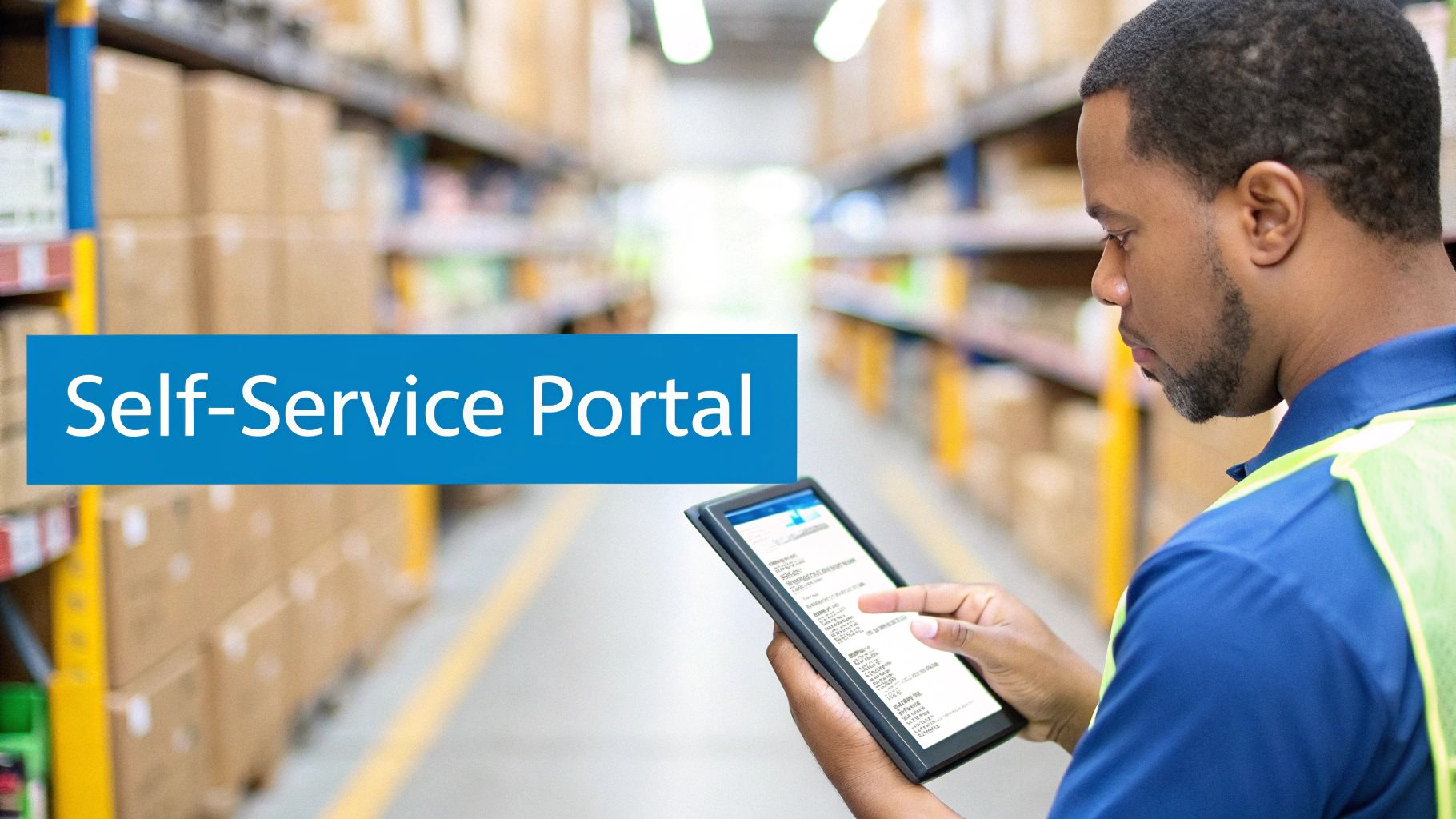
For a millwork supplier, this means a contractor can log into their dedicated portal at 10 PM from a job site, re-order a specific set of custom mouldings from a past project, and see their negotiated pricing instantly. This convenience eliminates phone tag and order entry errors, solidifying your role as an indispensable partner rather than just a supplier.
How to Implement Self-Service Portals
Building an effective self-service portal is about giving clients control and visibility. By automating routine tasks, you free up your sales team to focus on strategic relationship-building and complex, high-value sales opportunities.
- Provide Role-Based Permissions: Allow account managers to set different access levels. A procurement officer might have full purchasing power, while a project manager can only build carts for approval.
- Enable Quick Reordering: Include features like saved order templates and order history with a one-click reorder button. This is crucial for clients who frequently purchase the same materials or components.
- Integrate Key Systems: Connect your portal with accounting and ERP software to show real-time stock levels, customer-specific pricing, and accurate shipping information, ensuring a seamless experience.
3. Optimize Pricing Strategy with Dynamic and Tiered Models
A one-size-fits-all pricing model rarely works in the complex B2B world. Implementing dynamic and tiered pricing allows you to tailor costs to specific customers and market conditions, a critical component of modern B2B ecommerce best practices. This approach adjusts prices based on factors like order volume, customer loyalty, and even real-time inventory levels, ensuring you remain competitive while maximizing profitability.
For a cabinet manufacturer, this could mean offering a 10% discount on hardware for a high-volume contractor who consistently places large orders. Simultaneously, a new, smaller account might see standard pricing. This flexibility rewards loyalty and accommodates the diverse purchasing power of your B2B clients, directly boosting customer retention and revenue.
How to Implement Dynamic and Tiered Pricing
Effectively deploying a flexible pricing strategy requires data-driven decisions and clear communication with your customers. By automating pricing rules within your ecommerce platform, you can cater to each account's unique relationship with your business without manual intervention. Learn more about how TimberCloud handles custom pricing to see these strategies in action.
- Segment Your Customer Base: Group customers into tiers based on purchasing history, order frequency, or contract terms. Assign specific pricing rules or discount levels to each segment.
- Establish Quantity Breaks: Automate price reductions for bulk orders. For example, set rules that automatically apply a 5% discount for orders over 100 board feet of a specific lumber type and a 10% discount for orders over 500.
- Use Data to Inform Decisions: Analyze sales data to identify which products have high price elasticity. Use this information to test dynamic adjustments, such as slightly increasing prices on in-demand items during peak season while protecting your margins with set floor prices.
4. Integrate Advanced Analytics and Business Intelligence
Integrating advanced analytics and business intelligence (BI) tools transforms raw data into strategic assets. This practice moves beyond basic sales tracking to uncover deep insights into customer behavior, operational bottlenecks, and market trends. For B2B ecommerce, this means using data to make informed decisions that drive efficiency, personalize experiences, and boost revenue.
For a millwork manufacturer, this could involve using a tool like Tableau to visualize which product configurations are most popular with high-volume contractors. By identifying these patterns, they can optimize inventory, proactively suggest popular add-ons during the ordering process, and forecast demand for specific materials, making it one of the most impactful B2B ecommerce best practices.
How to Leverage Analytics in Your B2B Operations
An effective analytics strategy empowers your team with actionable intelligence, not just overwhelming data. By connecting information from your ecommerce platform, ERP, and CRM, you gain a holistic view of your business performance and customer journey.
- Define Key Performance Indicators (KPIs): Start by identifying the metrics that matter most to your business goals. This could include customer lifetime value (CLV), quote-to-order conversion rate, and average order value (AOV) for specific account tiers.
- Invest in Data Quality: Ensure the data you collect is clean, accurate, and consistent across all platforms. Implement data governance policies to maintain integrity, as poor data leads to flawed insights and poor decisions.
- Create Self-Service Dashboards: Empower your sales, marketing, and operations teams with user-friendly dashboards (using tools like Looker or Sisense). This allows them to explore data and find answers without relying on a dedicated analyst for every request.
5. Ensure Seamless Integration with Backend Systems (ERP, CRM, Accounting)
A powerful B2B ecommerce storefront is only half the equation. True operational efficiency comes from seamlessly connecting your customer-facing platform with your core business systems like Enterprise Resource Planning (ERP), Customer Relationship Management (CRM), and accounting software. This integration creates a single source of truth, automating data flow from order placement to fulfillment and invoicing.
For a custom cabinet manufacturer, this means an online order automatically updates inventory in their ERP (like Oracle NetSuite), creates a customer record in their CRM (like Salesforce), and generates an invoice in their accounting software. This eliminates manual data entry, reduces human error, and gives customers real-time visibility into stock levels and order status, a cornerstone of B2B ecommerce best practices.
How to Integrate Your Backend Systems
Achieving a unified system requires careful planning and execution. The goal is to create an automated, error-free workflow that supports business growth and enhances the customer experience by ensuring all data is consistent and up-to-date across every platform.
- Map Data Flows First: Before writing any code, thoroughly document how data currently moves between your systems. Identify what information (e.g., customer data, order details, inventory levels) needs to sync, in which direction, and how frequently.
- Leverage APIs and Middleware: Use Application Programming Interfaces (APIs) for direct, real-time communication between systems. For more complex setups involving multiple applications, middleware can act as a central hub to manage and translate data between them.
- Prioritize a Staging Environment: Always test new integrations in a separate staging or sandbox environment. This allows you to identify and fix any issues without disrupting live operations or corrupting valuable production data. Explore how modern platforms are built with these capabilities in mind by learning more about TimberCloud's integrated features.
6. Provide Multi-Channel Selling and Omnichannel Experience
An omnichannel experience means creating a seamless and consistent customer journey across all touchpoints, whether online or offline. For B2B buyers, this involves synchronized inventory, unified customer profiles, and consistent pricing, whether they are on your direct website, a marketplace like Amazon Business, a mobile app, or interacting with a sales representative. This strategy is a cornerstone of modern B2B ecommerce best practices, meeting buyers where they are.
Imagine a cabinet maker who browses your custom hardware on Amazon Business, adds items to their cart, and later logs into your direct B2B portal to complete the purchase with their negotiated pricing. The order history and cart are perfectly synced, providing a frictionless experience that builds trust and encourages repeat business.
How to Implement an Omnichannel Strategy
Executing a successful omnichannel approach requires centralizing your data and operations. By unifying the customer experience, you can increase sales opportunities and improve customer loyalty, as buyers appreciate the convenience and consistency.
- Centralize Inventory Management: Use a system that syncs inventory levels in real-time across all sales channels. This prevents overselling specialty lumber or hardware and ensures accurate availability information for your customers.
- Maintain Consistent Branding: Ensure your brand voice, visuals, and product information are uniform across your website, marketplaces, and social commerce platforms. A consistent brand builds recognition and credibility.
- Unify Customer Data: Use a CRM or a B2B ecommerce platform that consolidates customer interaction data from all channels. This gives your sales team a 360-degree view of each account, enabling more personalized and effective engagement.
7. Implement Robust Cybersecurity and Compliance Measures
B2B ecommerce platforms are a prime target for cyberattacks because they handle sensitive business data, including financial information, intellectual property, and customer details. Implementing robust cybersecurity is not just an IT task; it's a foundational business requirement. Strong security protects you from financial loss, legal penalties, and severe reputational damage, making it a non-negotiable B2B ecommerce best practice.
For a custom cabinet manufacturer, a security breach could expose negotiated pricing for all their large contractor accounts or leak proprietary cabinet designs. Adhering to standards like PCI DSS for payment processing and implementing SSL encryption ensures that every transaction and data exchange is secure, building essential trust with high-value clients who expect their information to be protected.
How to Implement Cybersecurity and Compliance in Your B2B Store
A multi-layered security strategy, often called "defense-in-depth," is crucial for protecting your digital assets. This involves combining technical safeguards, strict processes, and employee training to create a resilient defense against threats.
- Secure Your Platform: Start with a platform that is PCI DSS compliant, like Shopify or BigCommerce. Enable SSL encryption across your entire site to secure data in transit and implement role-based access controls to limit employee access to sensitive information.
- Conduct Regular Audits: Don't set it and forget it. Perform regular security risk assessments and vulnerability scans, either internally or with a third-party expert, to identify and patch weaknesses before they can be exploited.
- Establish a Response Plan: Create and maintain a data backup and disaster recovery plan. In the event of a breach, having a clear procedure for restoring data and communicating with affected clients is critical for business continuity and maintaining trust.
8. Develop Effective B2B Content Marketing and Thought Leadership
B2B buyers are researchers, not impulse shoppers. The sales cycle is longer and involves multiple stakeholders who need to be convinced. Effective B2B content marketing builds trust and establishes your company as an industry authority, guiding buyers through their decision-making process with valuable, educational content rather than just sales pitches.
For a custom cabinet manufacturer, this could involve publishing a detailed whitepaper comparing the durability and finishing properties of different wood species, or a case study showcasing how a large commercial developer saved time and money using your modular cabinet systems. This content addresses specific buyer pain points and demonstrates your expertise, making it a critical component of B2B ecommerce best practices.
How to Implement B2B Content Marketing in Your Store
A strong content strategy nurtures leads, supports sales conversations, and keeps your brand top-of-mind. By providing solutions-oriented content, you attract and retain the right audience, driving qualified traffic to your ecommerce platform.
- Map Content to the Buyer's Journey: Create content for each stage. An "awareness" stage blog post might be "5 Trends in Sustainable Millwork for 2024," while a "decision" stage asset would be a detailed ROI calculator comparing your products to a competitor's.
- Leverage Data and Customer Insights: Use customer feedback and sales data to generate relevant topics. If many clients ask about fire-rated materials, create an in-depth guide on the topic. For more content marketing insights, explore the TimberCloud blog.
- Establish Thought Leadership: Go beyond product features. Publish articles, industry reports, or webinars on broader topics like supply chain optimization in woodworking or the future of CNC manufacturing. This positions your brand as a forward-thinking leader.
9. Optimize for Mobile Commerce and Responsive Design
The modern B2B buyer is no longer tethered to a desktop. They are on job sites, in warehouses, or traveling between meetings, using smartphones and tablets to research products and place orders. Optimizing for mobile commerce ensures your ecommerce site delivers a seamless, efficient experience across all devices, a non-negotiable aspect of today's B2B ecommerce best practices.
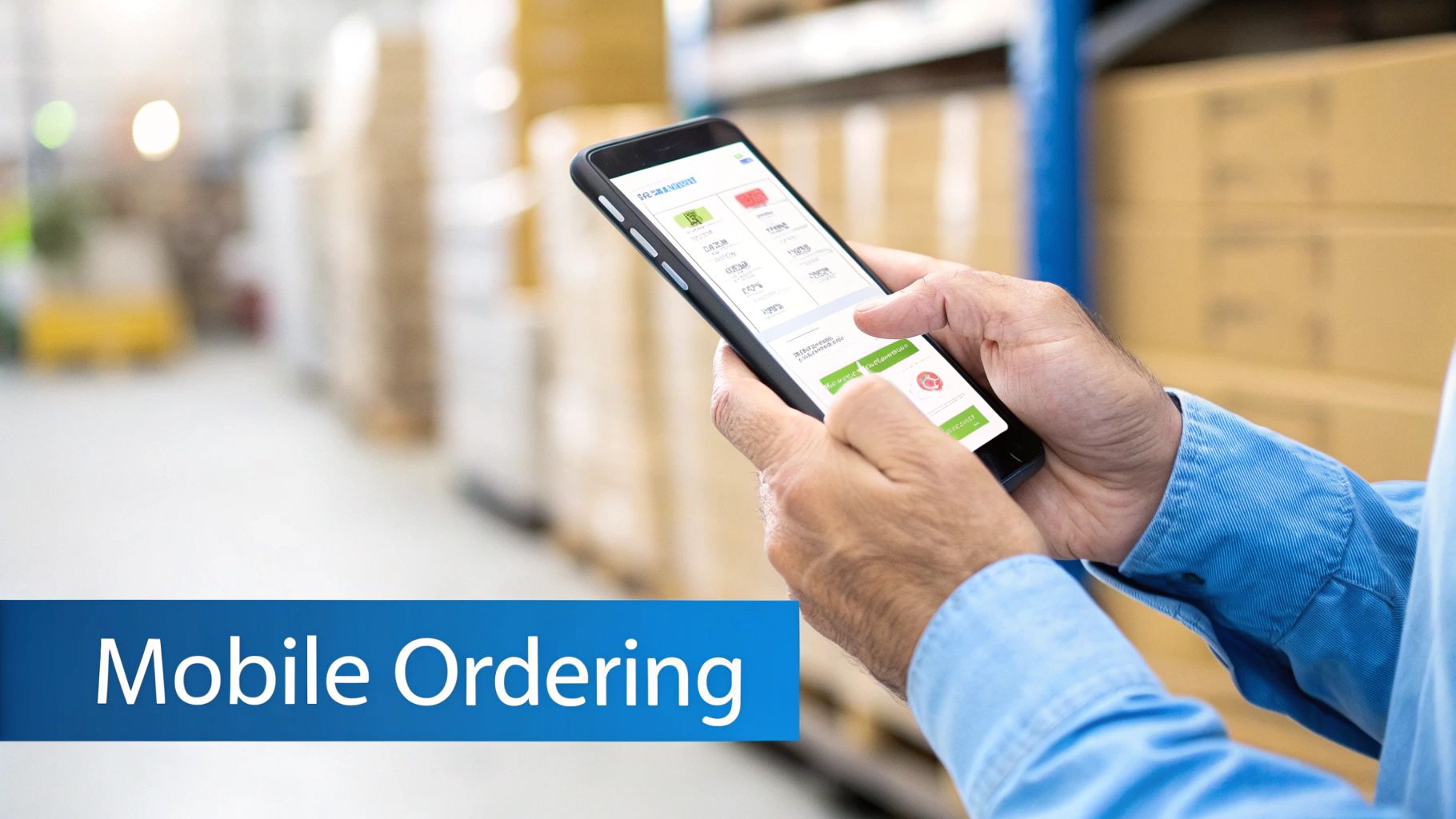
For a cabinet manufacturer, this means a contractor can easily pull up their phone on-site, configure a custom cabinet dimension, get an instant price, and place an order without needing to return to an office. This convenience dramatically speeds up the procurement cycle and improves customer satisfaction. Platforms like Alibaba and Amazon Business have set the standard, proving that complex B2B transactions can be executed flawlessly on a small screen.
How to Implement Mobile Optimization in Your B2B Store
A mobile-first approach is crucial for capturing and retaining business from buyers who value efficiency and accessibility. This means designing the user experience for the smallest screen first and then scaling up, ensuring core functionality is always front and center.
- Adopt a Responsive Design: Your site's layout, text, and images must automatically adjust to fit any screen size. This provides a consistent experience whether a buyer is on a desktop, tablet, or smartphone.
- Simplify Navigation and Checkout: Use clear, concise menus, large buttons, and a streamlined checkout process. Minimize the number of fields required to complete a purchase and implement mobile-friendly payment options like digital wallets.
- Prioritize Performance: Mobile users expect fast loading times. Compress images, leverage browser caching, and minimize code to ensure your pages load quickly, even on slower cellular connections. Implement features like one-click reordering for repeat customers to further accelerate the buying process.
10. Build Strong Customer Relationships Through Personalization and Support
In B2B, transactions are built on trust and relationships, not just price. Building strong customer connections requires a deep commitment to personalization and exceptional support, turning one-time buyers into long-term partners. This goes beyond just knowing a client's name; it's about anticipating their needs and making their job easier, a cornerstone of effective B2B ecommerce best practices.
For a millwork supplier, this means their B2B portal could use past order data to recommend complementary hardware or suggest restocking on frequently purchased lumber species. When a contractor logs in, they see communications relevant to their trade, not generic marketing blasts. This level of tailored interaction shows you understand their business and value their partnership.
How to Foster Stronger B2B Relationships
A proactive, data-driven approach to customer service and personalization builds loyalty that competitors can't easily replicate. By investing in these areas, you create a support system that not only solves problems but also drives business growth.
- Implement Proactive Customer Success: Instead of waiting for issues, have a dedicated team that regularly checks in with key accounts. Use tools like Salesforce or HubSpot to monitor account health and identify opportunities to offer assistance or upsell.
- Leverage Purchase Data: Use historical order information to provide smart, personalized product recommendations. If a cabinet maker consistently orders a specific type of maple wood, your system can automatically suggest matching drawer slides or hinges.
- Provide Multi-Channel, Rapid Support: Offer support through phone, email, and live chat. Ensure your team, equipped with a platform like Zendesk or Intercom, is trained to respond quickly and knowledgeably, resolving issues on the first contact.
- Establish Feedback Loops: Regularly track customer satisfaction using metrics like the Net Promoter Score (NPS). Use this feedback to continuously refine your products, services, and overall customer experience.
Top 10 B2B eCommerce Best Practices Comparison
| Strategy | 🔄 Implementation Complexity | 💡 Resource Requirements | ⭐ Expected Outcomes | ⚡ Ideal Use Cases | 📊 Key Advantages |
|---|---|---|---|---|---|
| Implement Robust Account-Based Management (ABM) | High — heavy customization, cross-team coordination | Dedicated account teams, advanced CRM & analytics, personalized content | Significantly larger deal sizes; higher CLV; improved retention | High-value enterprise accounts; strategic upsell/renewal targets | Higher ROI per account; aligned sales & marketing; efficient resource use |
| Streamline Procurement with Self-Service Portals | Medium–High — integrations with ERP, SSO and workflows | Dev resources, UX design, ERP/ERP connectors, training | Faster order processing; lower operational costs; improved CX | High-volume repeat buyers; procurement teams needing autonomy | 24/7 ordering; reduced manual overhead; improved order accuracy |
| Optimize Pricing with Dynamic & Tiered Models | High — pricing engines, legal/compliance checks, testing | Data science, pricing platform, monitoring tools, A/B testing | Increased revenue & margins; better competitive positioning | Price-sensitive markets; volume-based customers; inventory clearing | Revenue optimization; automated segmentation; fewer manual negotiations |
| Integrate Advanced Analytics & BI | High — data integration, governance, ML pipelines | Data engineers, BI tools, dashboards, analytics talent | Data-driven decisions; growth opportunities; churn reduction | Scaling businesses; multi-channel operations needing insights | Actionable insights; forecasting; KPI visibility across org |
| Ensure Seamless Backend Integration (ERP/CRM/Accounting) | High — API mapping, middleware, legacy compatibility | Integration engineers, middleware, thorough testing & staging | Real-time data consistency; faster fulfillment; fewer errors | ERP-centric operations; complex supply chains and order-to-cash | Eliminates manual entry; improves cash flow; operational efficiency |
| Provide Multi-Channel Selling & Omnichannel Experience | High — sync inventory, pricing, & fulfillment across channels | Channel managers, integration layer, unified inventory system | Increased reach; higher LTV; diversified revenue streams | Sellers combining direct site, marketplaces, mobile & offline | Consistent experience; expanded market access; multiple revenue paths |
| Implement Robust Cybersecurity & Compliance | High — continuous monitoring, audits, policy enforcement | Security experts, monitoring tools, compliance certifications | Reduced breach risk; regulatory compliance; greater trust | Regulated industries; platforms handling sensitive payments/data | Protects data; lowers legal/financial exposure; trust differentiator |
| Develop B2B Content Marketing & Thought Leadership | Medium — content strategy, production cadence, promotion | Writers, designers, research budget, distribution channels | Improved lead quality; stronger brand authority; long-term pipeline | Complex buying cycles; education-driven purchase decisions | Educates buyers; boosts SEO and lead nurturing; competitive differentiation |
| Optimize for Mobile Commerce & Responsive Design | Medium — responsive UI + optional native app development | Frontend/mobile developers, performance optimization, QA | Higher mobile conversions; better UX; reduced cart abandonment | Field buyers, mobile-first industries, on-the-go ordering | Accessibility on any device; improved conversion; SEO benefits |
| Build Strong Customer Relationships via Personalization & Support | Medium–High — CRM data, AI recommendations, support staffing | CRM, AI recommendation engines, customer success teams | Improved retention; higher CLV; increased upsell/cross-sell rates | Account-based selling; high-touch customer segments | Personalized experiences; proactive support; stronger advocacy |
From Blueprint to Bottom Line: Activating Your B2B Strategy
Navigating the digital transition from a traditional workshop to a thriving B2B e-commerce powerhouse is a significant undertaking. The journey involves more than simply launching a website; it requires a strategic overhaul of how you manage customer relationships, process orders, and present your unique, configurable products to a professional audience. Throughout this guide, we've detailed the essential blueprints for success, moving from high-level strategy to the granular, on-the-ground tactics that make a real difference.
The core takeaway is this: B2B e-commerce success in the custom manufacturing and woodworking sector hinges on a dual focus. You must deliver a frictionless, intuitive, and personalized front-end experience for your buyers while simultaneously building a robust, integrated, and automated back-end engine. These two elements are not separate goals; they are two sides of the same coin. A seamless self-service portal is only as good as the ERP and CRM integrations that power its real-time data. Likewise, a sophisticated dynamic pricing model loses its impact without the analytics to inform its rules and the mobile accessibility to deliver it anywhere.
Key Takeaways for Immediate Action
To truly implement these B2B ecommerce best practices, it's crucial to move from reading to doing. Here are the most critical pillars to focus on first:
- Embrace Self-Service: Your B2B clients-be they contractors, designers, or distributors-value autonomy and efficiency. Implementing self-service portals with account-based management isn't a luxury; it's a fundamental requirement for streamlining their procurement process and freeing up your sales team to focus on high-value relationships.
- Integrate Your Tech Stack: Disconnected systems are the enemy of growth. Prioritize the seamless integration of your e-commerce platform with your ERP, CRM, and accounting software. This unification is the key to automating workflows, ensuring data accuracy, and providing the single source of truth needed for smart decision-making.
- Personalize the Experience: From tiered pricing and customer-specific catalogs to targeted content marketing, personalization is what transforms a transactional relationship into a loyal partnership. Use your data to understand your buyers' needs and anticipate their next move, proving you are not just a supplier but a strategic partner.
Ultimately, mastering these principles will do more than just increase online sales. It will fortify your business against market volatility, enhance operational efficiency from the shop floor to the front office, and build a scalable foundation for future growth. By treating your digital presence with the same precision and care you apply to a custom millwork project, you create a powerful engine for long-term profitability and industry leadership. The blueprint is in your hands; it's time to start building.
Ready to implement these B2B e-commerce best practices with a platform built specifically for the custom woodworking and manufacturing industry? TimberCloud, Inc. provides the specialized tools you need, from configurable product quoting to seamless ERP integration, to turn your digital strategy into reality. Discover how our solution can transform your business by visiting us at TimberCloud, Inc. today.
Topics
TimberCloud Team
Content Team
The TimberCloud team is dedicated to helping manufacturers streamline their operations with intelligent software solutions.