Unlocking the Benefits of Cloud Based ERP Systems
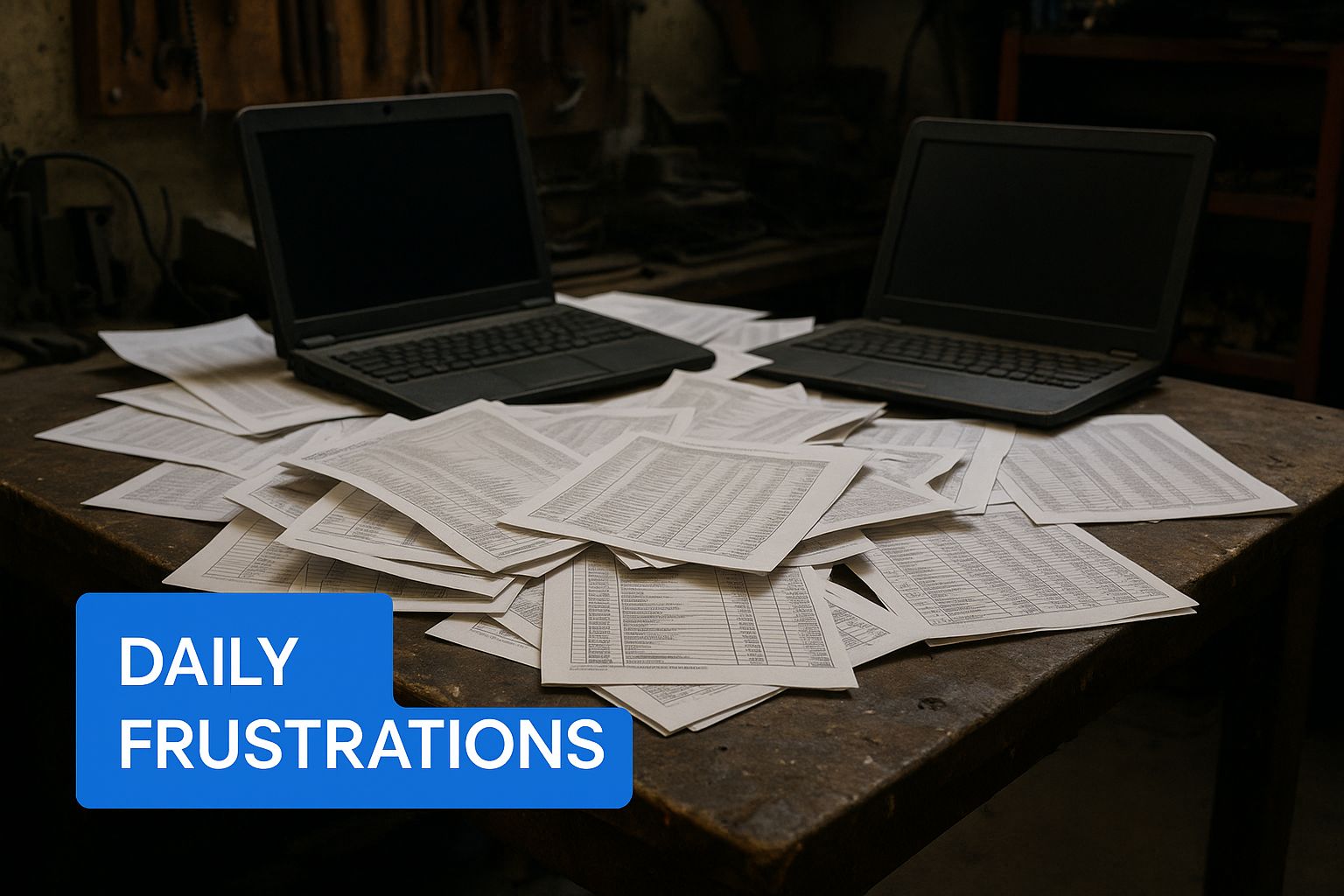
For a lot of custom manufacturing and woodworking shops, the day-to-day can feel like a constant firefight. You're juggling spreadsheets, wrestling with different software that doesn't talk to each other, and chasing down paper trails. It’s a familiar grind that creates a fog of inaccurate data and operational headaches, making it nearly impossible to get a true read on the health of your business.
This isn’t just a minor annoyance; it’s a serious roadblock to growth.
Why Old Systems Create New Problems
If you’re running a shop, you know the feeling. The frustration of trying to manage a complex business with tools that just aren't up to the job. Relying on a patchwork of spreadsheets or an ancient on-premise system means you’re always reacting to problems instead of getting ahead of them.
This old way of doing things inevitably leads to a chain reaction of issues that probably sound all too familiar:
- Guesswork with Inventory: Not knowing exactly what materials you have on hand leads to two bad outcomes: surprise shortages that bring production to a screeching halt, or expensive overstocking that ties up cash you could be using elsewhere.
- Hidden Production Bottlenecks: Without a single, unified view of the shop floor, you can't spot where a job is getting stuck until it's already late. That means blown deadlines and unhappy customers.
- Painfully Slow Quoting: Manually crunching the numbers for every custom job is a time-sink, and it’s easy to make mistakes. This can lead to you either losing the bid or, even worse, winning an unprofitable project.
- Flying Blind: You can't make smart decisions without good data. Old systems leave you guessing about a job’s actual profitability, your team’s real capacity, and the overall financial state of the business.
This is the chaos that comes from disconnected information and manual workarounds.
It’s precisely this kind of daily struggle that’s pushing a massive shift in the industry. The move to cloud-based ERP systems isn't just a trend; it's a fundamental change in how businesses operate.
Think about this: by 2025, an estimated 70% of the entire ERP market will be cloud-based. That’s a huge leap from just 52% back in 2020. This rapid adoption shows just how effectively cloud ERPs solve the core challenges that plague manufacturers, offering things like easy scalability and instant access to real-time data. You can dig deeper into the ERP market's evolution to see the full picture.
On-Premise vs Cloud ERP At a Glance
To really understand this shift, it helps to see a direct comparison. The table below breaks down the key differences between the old way (on-premise servers) and the modern approach (cloud).
| Attribute | Traditional On-Premise ERP | Modern Cloud-Based ERP |
|---|---|---|
| Initial Cost | High - Requires large upfront investment in hardware, software licenses, and IT staff. | Low - Monthly or annual subscription fee (SaaS model) with no major hardware costs. |
| Implementation | Long & Complex - Can take months or even years to set up, customize, and deploy. | Fast & Simple - Often ready to go in weeks, with minimal on-site setup required. |
| Accessibility | Limited - Typically restricted to on-site access or complex, slow VPN connections. | Anywhere, Anytime - Access your data from any device with an internet connection. |
| Maintenance & Updates | Your Problem - You are responsible for all updates, security patches, and server maintenance. | Vendor's Problem - The provider handles all updates, security, and maintenance automatically. |
| Scalability | Difficult & Expensive - Adding new users or features requires purchasing more hardware and licenses. | Easy & Flexible - Scale up or down as your business needs change with a simple subscription adjustment. |
This isn't just about technology; it's about business agility. The cloud model removes the burden of managing IT infrastructure and gives you a flexible tool that grows with you, directly addressing the limitations of older systems.
What Is a Cloud ERP System Really?
Let’s cut through the tech talk. At its heart, a cloud-based ERP (Enterprise Resource Planning) system is the central nervous system for your entire manufacturing operation. Think of it as replacing all those scattered spreadsheets, disconnected software programs, and stacks of paper with a single, smart platform that everyone in your company can use.
Imagine this: your sales team, shop floor manager, and bookkeeper are all looking at the exact same, up-to-the-minute information for every single job. That’s what a cloud ERP delivers. Instead of different departments working from their own—often outdated—set of plans, everyone shares one source of truth. Best of all, they can access it from anywhere with an internet connection, whether it's a tablet on the shop floor or a laptop at a client's office.
This is all made possible through a model called Software as a Service (SaaS).
Understanding the SaaS Model
Think of it like this: would you rather buy a massive, expensive DVD collection or just subscribe to Netflix? The old way of doing things—on-premise software—was like buying the DVDs. You had to purchase the physical servers (the DVD players), buy the software licenses for a huge upfront cost (the DVDs), and then hire an IT crew to keep it all running. It was a massive capital expense and a constant headache.
The SaaS model completely changes the game. You don't own any of the complex hardware or software. Instead, you pay a predictable subscription fee to access a powerful tool over the internet. The provider takes care of all the security, updates, and maintenance behind the scenes.
This frees up your team to do what they do best—build incredible products—instead of worrying about server racks and software updates. It’s a massive shift from owning a clunky, expensive asset to using a flexible, always-improving service.
This subscription approach is exactly why the benefits of a cloud based ERP are so compelling. You get world-class technology without the huge price tag or IT overhead.
How It Works in Your Shop
So, what does this look like day-to-day? A cloud ERP weaves every part of your business into a single, smooth workflow. It connects everything from the first customer quote to material purchasing, production scheduling, and final invoicing. You can explore the full range of integrated tools to see how all the pieces fit together.
Here’s a practical example of how it connects your teams:
- Sales & Quoting: A customer designs a custom cabinet on your website. That order, with all its unique specs, instantly pops up in the production queue—no manual entry needed.
- Inventory Management: The system automatically checks your stock. If you're running low on a specific type of maple, it can flag it and prompt a purchase order before you run out.
- Production Floor: Your crew pulls up digital cut lists and work orders on a shop-floor tablet. As they finish each step, they update the job status in real-time, so everyone knows exactly where things stand.
- Shipping & Finance: The moment the job is marked complete, the system helps generate a shipping label and automatically creates the final invoice.
This seamless connection gets rid of redundant data entry, slashes the risk of human error, and gives you a live, bird's-eye view of your entire operation, from the initial lead to the final payment.
Drive Greater Efficiency with Real-Time Data
In a custom woodworking shop, efficiency isn't just about how fast you can cut and assemble. It's about getting rid of all the little hurdles that stand between a customer's vision and the finished piece. This is where cloud-based ERP systems truly shine, shifting your entire operation from reactive to proactive using the power of real-time data.
No more chasing down paperwork or walking the shop floor just to get a status update.
Imagine a sales order is confirmed. In that same instant, the system checks your material stock, flags exactly what needs to be ordered, and automatically schedules time on the right machines. A live production schedule just… happens. This isn't a futuristic dream; it’s the new reality for shops running on a central data hub.
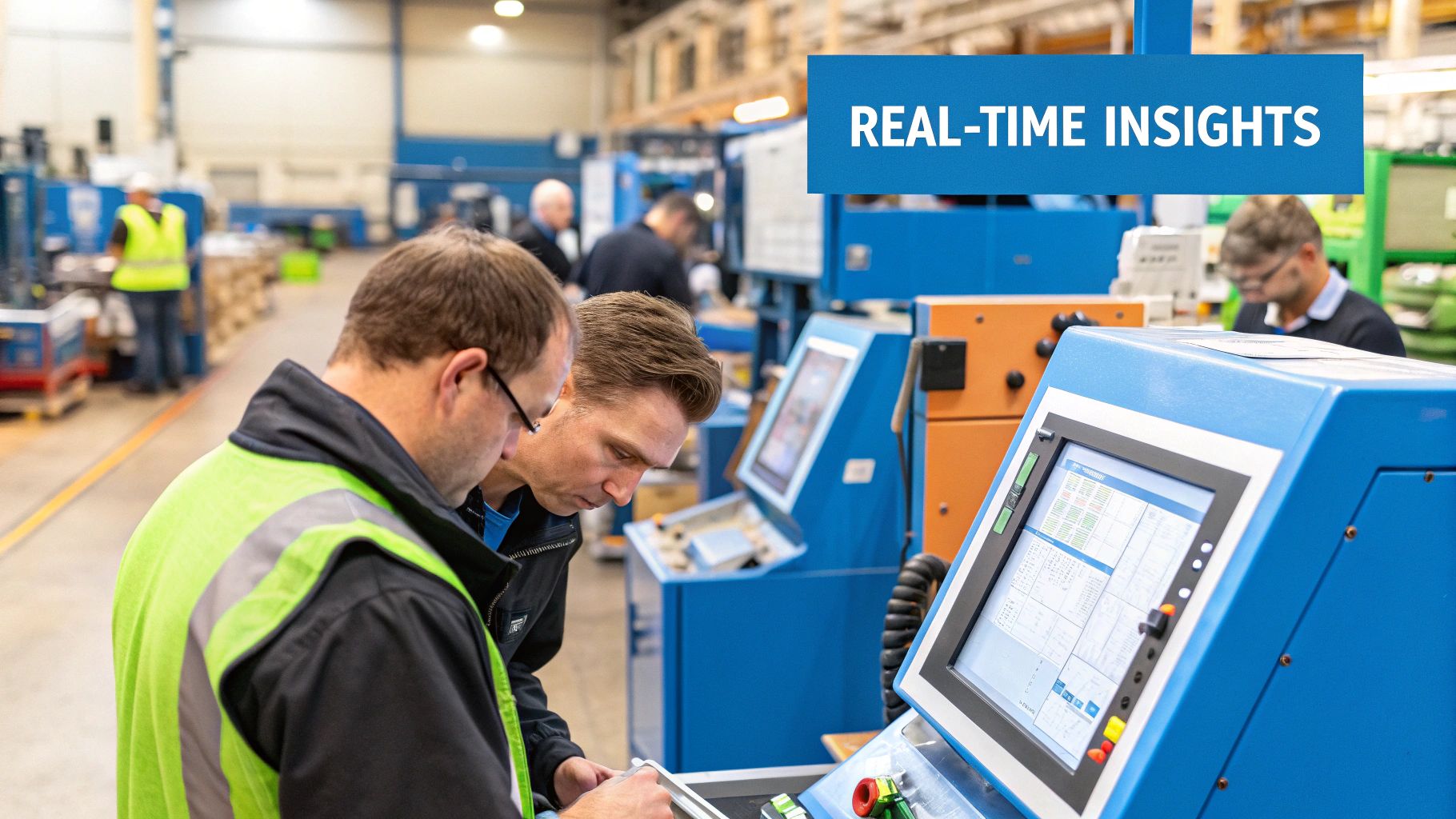
This kind of connectivity ties every part of your business together. A manager doesn't have to guess how a project is coming along. They can pull up a dashboard on a tablet and see everything at a glance—from labor costs tracking against the estimate to exactly where a specific job is on the floor.
The real game-changer is moving from delayed reactions to making smart moves right now. You spot a potential bottleneck before it grinds everything to a halt, not after a deadline has already been blown.
Turning Data Into Decisions
This live data stream isn't just for looking over everyone's shoulder; it empowers your whole team to make better decisions, faster. When you know every piece of information is current and accurate, your shop becomes incredibly agile. You can give a customer a lead time you actually trust because you know your production schedule is solid and your materials are accounted for.
This is especially true as modern ERPs get smarter. The integration of artificial intelligence (AI), for instance, is making a huge difference. AI-powered systems can boost operational efficiency by up to 40% compared to older platforms simply by helping you make quicker decisions and forecast more accurately. This technology is a key driver behind the SaaS model, which now accounts for $33 billion of the total cloud ERP market. You can explore the latest ERP statistics to see the bigger picture.
The results of this data-driven approach show up directly on your bottom line. It's not just theory; it’s tangible.
- Shorter Lead Times: When you automate the workflow from sales order to production, you eliminate the administrative bog-down that forces you to pad your delivery dates.
- Reduced Machine Downtime: Scheduling jobs based on real-time capacity and material availability keeps your machines doing what they do best: adding value. They aren't sitting idle waiting for parts or instructions.
- Improved Costing Accuracy: Tracking actual labor hours and material usage against the original quote in real-time gives you a crystal-clear picture of each job's profitability. This feedback loop helps you bid smarter next time.
At the end of the day, using real-time data from a cloud ERP means you’re running a tighter, more predictable, and more profitable shop. Period.
Cut Major Costs and Gain Predictable Spending
One of the first things you'll notice when moving to a cloud-based ERP is a total change in how you pay for your core business software. Traditional, on-premise systems are what accountants call a capital expense (CapEx). This means a huge, upfront investment in servers, software licenses, and the IT people needed to get it all running.
Think of it like building your own power plant just to run your workshop. It's a massive, often unpredictable financial drain that locks up cash you could be investing in a new CNC machine or hiring another skilled cabinet maker.
A cloud ERP completely flips that script. It turns that big, scary capital expense into a simple, predictable operating expense (OpEx).
From Unpredictable Bills to a Simple Subscription
Instead of buying everything outright, you're essentially paying for a service—a fully managed, top-of-the-line digital infrastructure. It’s a predictable monthly or annual subscription fee that covers everything: the software, all the maintenance, security, and updates. This makes budgeting a whole lot easier.
This financial model is a game-changer, especially for small and mid-sized businesses. It’s no surprise that 61% of SMBs now run more than 40% of their operations in the cloud. This is part of a much bigger trend, with the global cloud computing market expected to reach $732 billion by 2025. For more context, you can check out these statistics on cloud technology adoption and see how it's reshaping business finance.
The savings aren't just about avoiding the big server purchase, either. The total cost of ownership drops dramatically when you get rid of all these hidden expenses:
- No Dedicated IT Staff: Forget paying an IT specialist to babysit servers, install security patches, or deal with hardware meltdowns.
- Zero Upgrade Costs: Those disruptive and expensive version upgrades that can take an on-premise system down for weeks? They're gone. Updates just happen automatically, behind the scenes.
- Lower Utility Bills: You can finally power down that energy-guzzling server closet. No more paying to run and cool hardware 24/7.
Moving to the cloud isn't just about buying software. It's about offloading the entire financial and operational headache of managing a complex IT system. This frees you up to pour your resources into what you do best—growing your business and perfecting your craft.
Scale Your Spending as You Scale Your Business
This model also gives you incredible financial flexibility. With an on-premise system, growth is expensive. Need to add five new users? That might mean buying a whole new server.
With a cloud ERP, you just adjust your subscription. You can explore different pricing plans to see exactly how this pay-as-you-grow model works. Your software costs scale right alongside your business—not in big, painful jumps. This ensures you're only ever paying for what you actually use, giving you a powerful, future-ready platform without the financial gamble.
Scale Your Business With Future-Proof Flexibility
For any custom manufacturer, growth isn't just about getting more orders. It’s about the real, physical changes that come with it—adding a new CNC router, bringing on a second shift, or maybe even opening a new shop across town. If you're running on traditional, on-premise software, each of those exciting steps forward comes with a massive, expensive IT headache.
You’re suddenly looking at buying a bigger server, planning a painful software migration, and bracing for weeks of downtime that you simply can't afford. Your technology, which should be helping you grow, ends up holding you back. This is where the real power of a cloud-based ERP shines: its incredible flexibility.
Instead of your business having to bend and break to fit the limits of your software, the software simply expands right along with you.
Grow Without the Growing Pains
Let's picture a custom cabinet shop that's finally ready to invest in a new 5-axis machine and the crew to run it. On an old-school system, that decision kicks off a huge IT project. With a cloud ERP? It’s often as simple as adjusting your subscription to add a few new users and define the new work center.
There's no new server to spec out and no software to reinstall on a dozen different computers. The entire system was built from the start to handle expansion. This pay-as-you-go approach means your software investment scales perfectly with your revenue, not ahead of it.
This kind of agility applies to every part of your operation:
- Adding People: Bring on new estimators, operators, or installers and get them set up in minutes.
- Expanding Your Footprint: Seamlessly manage jobs and inventory across multiple locations from one single source of truth.
- More Data, No Problem: Your data storage grows as your business does, so you never have to worry about running out of space as you accumulate more project files and customer history.
Stay Current With Automatic Updates
Beyond just making growth easier, a cloud ERP also keeps your shop’s core technology from becoming a dinosaur. With on-premise software, a "major version update" is an event everyone dreads. It’s expensive, eats up valuable time, and often requires calling in pricey consultants to make sure nothing breaks. It's no wonder so many shops are still running on software that’s dangerously out of date.
In a cloud environment, updates just happen. Your provider takes care of all the security patches, performance tweaks, and new feature rollouts behind the scenes. You just log in, and the new tools are there, ready to use, with zero disruption to your workflow.
This means your shop is always running on the latest and greatest technology. You get the benefit of new industry innovations without ever having to budget for another massive, painful upgrade project. Your system simply never gets old, and that's a powerful competitive edge.
Strengthen Data Security and Improve Accessibility
One of the first questions we always hear from manufacturers is, "Is my data really safe in the cloud?" It's a completely fair question. When your business data is your lifeblood, you want to know it's protected. But here’s the reality: leading cloud ERP providers offer a level of security that's far beyond what most individual shops could ever manage on their own.
Think of it like this: keeping cash under your mattress feels safe because it's physically close. But a bank offers armored vaults, professional guards, and federal insurance. It’s a whole different league of protection. Cloud ERPs are the bank for your data, investing millions in security that a locked server closet in the back office just can't match.
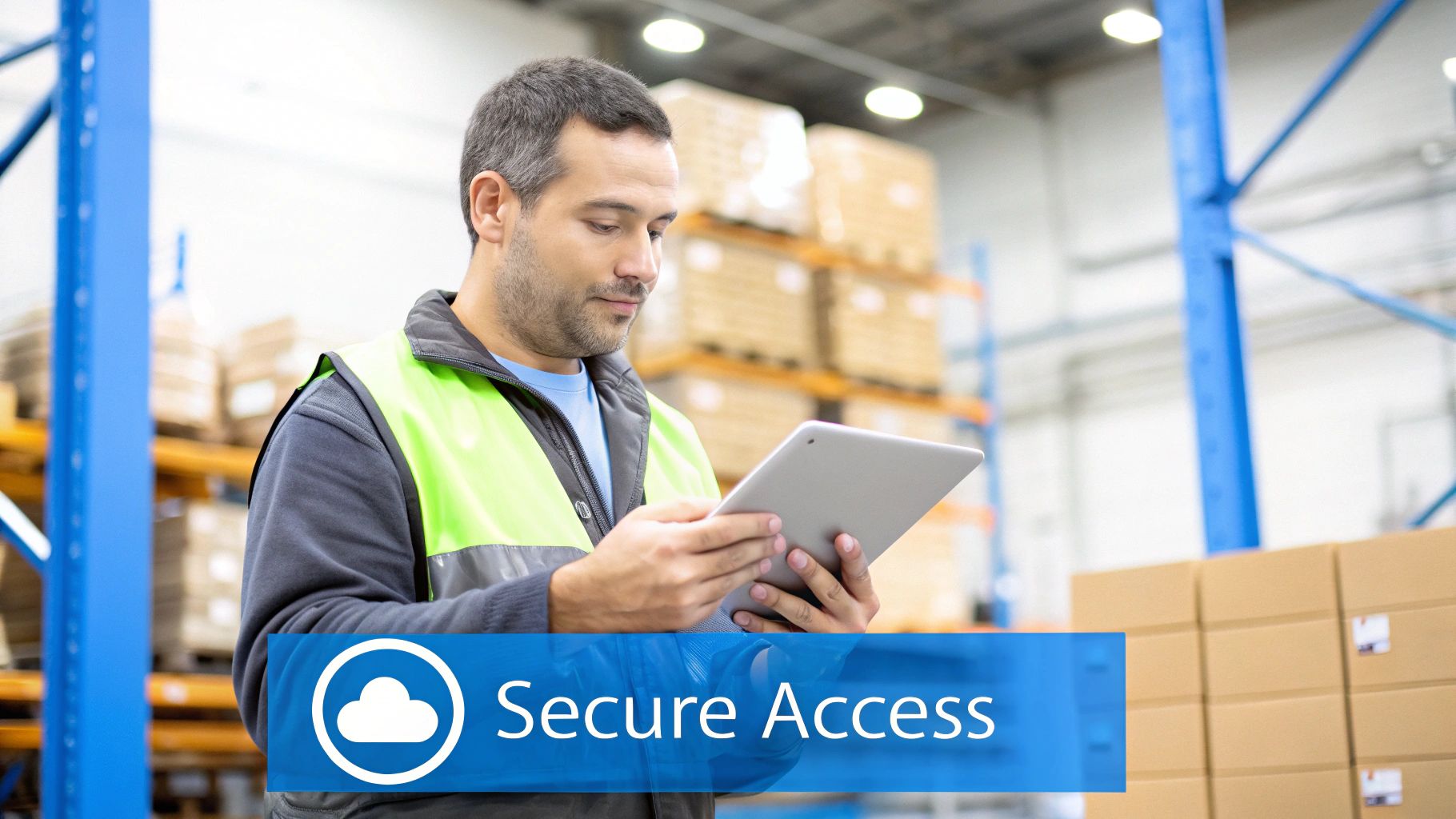
This kind of security isn't just a single feature; it's a complete, multi-layered defense system. The benefits of cloud based erp security are woven into the very fabric of the platform, not just bolted on as an afterthought.
How Cloud ERPs Protect Your Business
Instead of you or your IT guy worrying about running backups and installing security patches, the provider handles everything automatically. This constant, professional oversight keeps your most critical information—from customer lists and designs to job financials—shielded from modern threats.
- Advanced Data Encryption: Your information is scrambled both while it's in transit over the internet and while it's stored on servers. This makes it completely unreadable to anyone without the proper credentials.
- Automated Backups: The entire system is backed up regularly to multiple, geographically separate locations. This means your business can get back up and running quickly, even in the face of a fire, flood, or major hardware failure.
- Proactive Threat Monitoring: These providers have dedicated security teams monitoring their systems 24/7. They're constantly looking for suspicious activity and stopping threats before they can ever affect your operations.
This fundamentally shifts the burden of data security from your shoulders to a team of dedicated experts. Their only job is to protect your information, giving you a level of peace of mind that older, on-premise systems simply can't provide.
But world-class security is only half the story. The other, equally important benefit is controlled, flexible access. Your team members get the data they need, wherever they are. An owner can check on production status from a trade show. A salesperson can pull up real-time costs and generate an accurate quote right in a client's office.
This powerful combination of ironclad security and go-anywhere access creates a business that is both more resilient and more agile.
How to Make the Switch to a Cloud ERP
Making the move to a cloud-based ERP can feel like a huge undertaking, but it doesn't have to be a headache. The secret is to treat it like any other well-planned project, not some massive, abstract tech overhaul. The real goal here isn't just to buy new software; it's to find a system that actually solves your day-to-day problems and gives you room to grow.
This whole journey starts long before you ever look at a software demo. It begins with taking a good, hard look at how your shop runs right now. You need to map out your entire workflow, from the first customer quote all the way to the final paid invoice.
Where are things getting stuck? What repetitive, manual tasks are sucking up your team's valuable time? Pinpointing these specific pain points is the most critical first step—they become the yardstick you'll use to measure every potential solution.
Laying the Groundwork for a Smooth Transition
Once you’ve figured out what’s broken, you can start defining what a new system actually needs to do for you. This isn’t about chasing the longest feature list. It's about finding the right features for your shop. Create a simple, practical list of "must-have" functions that directly solve the problems you just uncovered.
With that list in hand, you can begin looking for vendors who genuinely understand the world of custom manufacturing and woodworking. You want a partner who speaks your language and gets the challenges of your industry, not someone who just throws a bunch of tech jargon at you.
Preparing your team is just as important as choosing the right software. A smooth transition depends on getting everyone on board, showing them how the new system will make their jobs easier, not harder. Open communication and proper training are non-negotiable.
Your Action Plan for Getting Started
If you break the process down into smaller, more manageable steps, the whole project immediately feels less daunting. A successful transition follows a logical path, one that keeps disruptions to a minimum while ensuring you see the benefits right from the start.
- Document Your Processes: Get it all down on paper—quoting, order entry, production, shipping. This will clearly show you where your biggest bottlenecks are.
- Define Your Core Needs: Make a prioritized list of features that will directly fix those specific problems.
- Research Industry-Specific Vendors: Zero in on ERP providers with a proven track record in the custom manufacturing space.
- Prepare Your Team: Explain the "why" behind the change and make sure you invest in solid training so everyone feels confident using the new tools.
All the benefits of a cloud based erp—from real-time data and lower costs to better security and the ability to scale—are completely within your reach. For more practical advice on improving your shop's operations, you can find some great insights on the TimberCloud blog. Following a structured approach like this gives you the confidence to move forward and find the right platform to help your business thrive.
Ready to see how a purpose-built platform can transform your woodworking or custom manufacturing shop? TimberCloud, Inc. unites e-commerce, ERP, and AI into a single workflow designed for modern makers. Schedule a demo today and discover a smarter way to manage your business.
Topics
TimberCloud Team
Content Team
The TimberCloud team is dedicated to helping manufacturers streamline their operations with intelligent software solutions.